Frames from Europe · Mont-Saint-Michel
Mont-Saint-Michel and the tide
A rock, a village and an abbey in a bay where the sea runs out for kilometres and comes back fast. The tide timetable is your most important piece of kit.
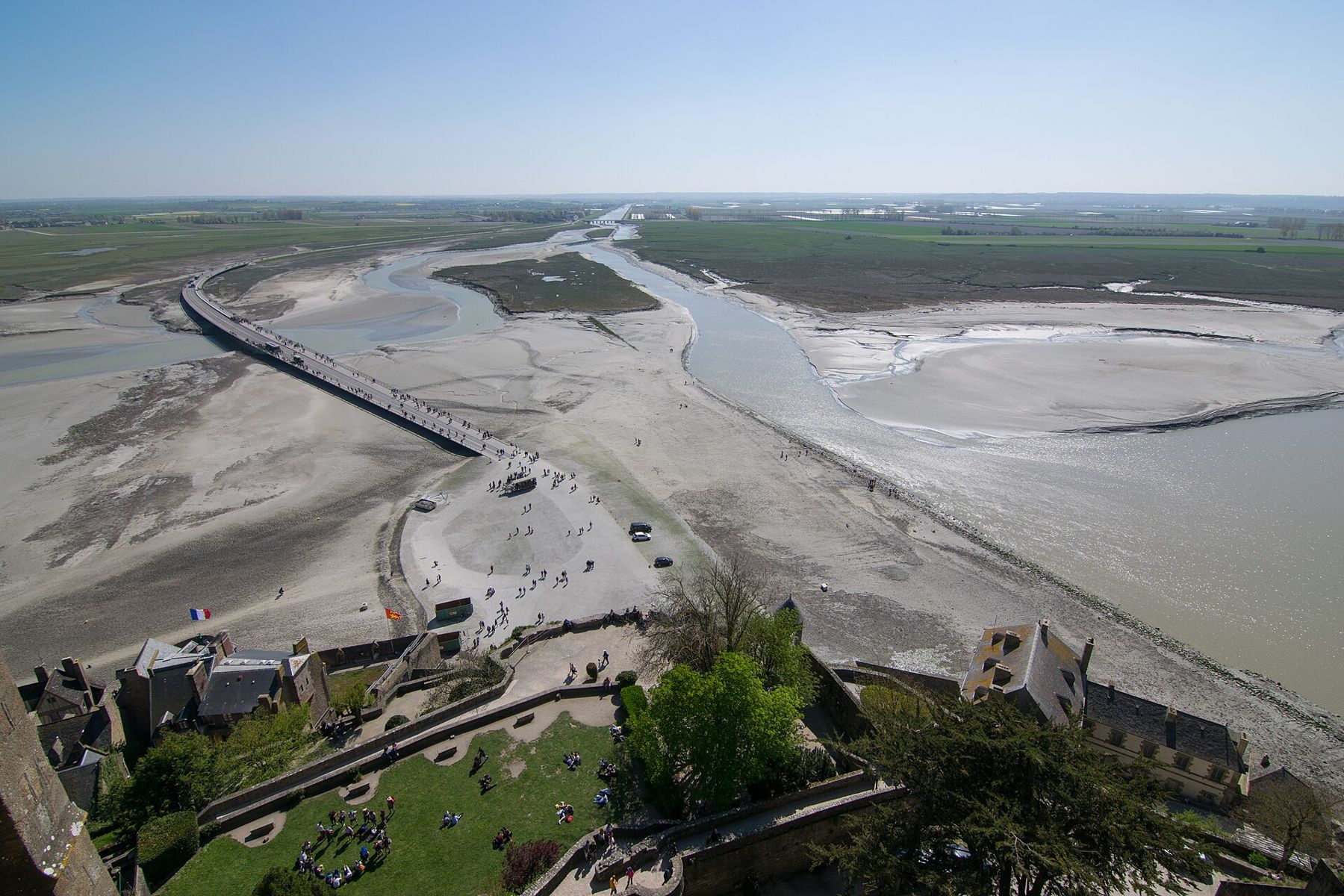
Mont-Saint-Michel is a granite island in a vast bay on the border of Normandy and Brittany, crowned by an abbey and wrapped in a small walled village. The bay has some of the largest tidal ranges in Europe. At low water the sand stretches out for kilometres around the rock; on the biggest tides the sea sweeps back in and the Mont becomes an island again for a few hours.
That rhythm of sand and water is what makes the photographs. The same view can show a dry plain of silvery sand, a mirror of shallow water or a true island in a grey sea, depending on the hour and the day. Before you think about light, look at the tide timetable.
The approach from the mainland
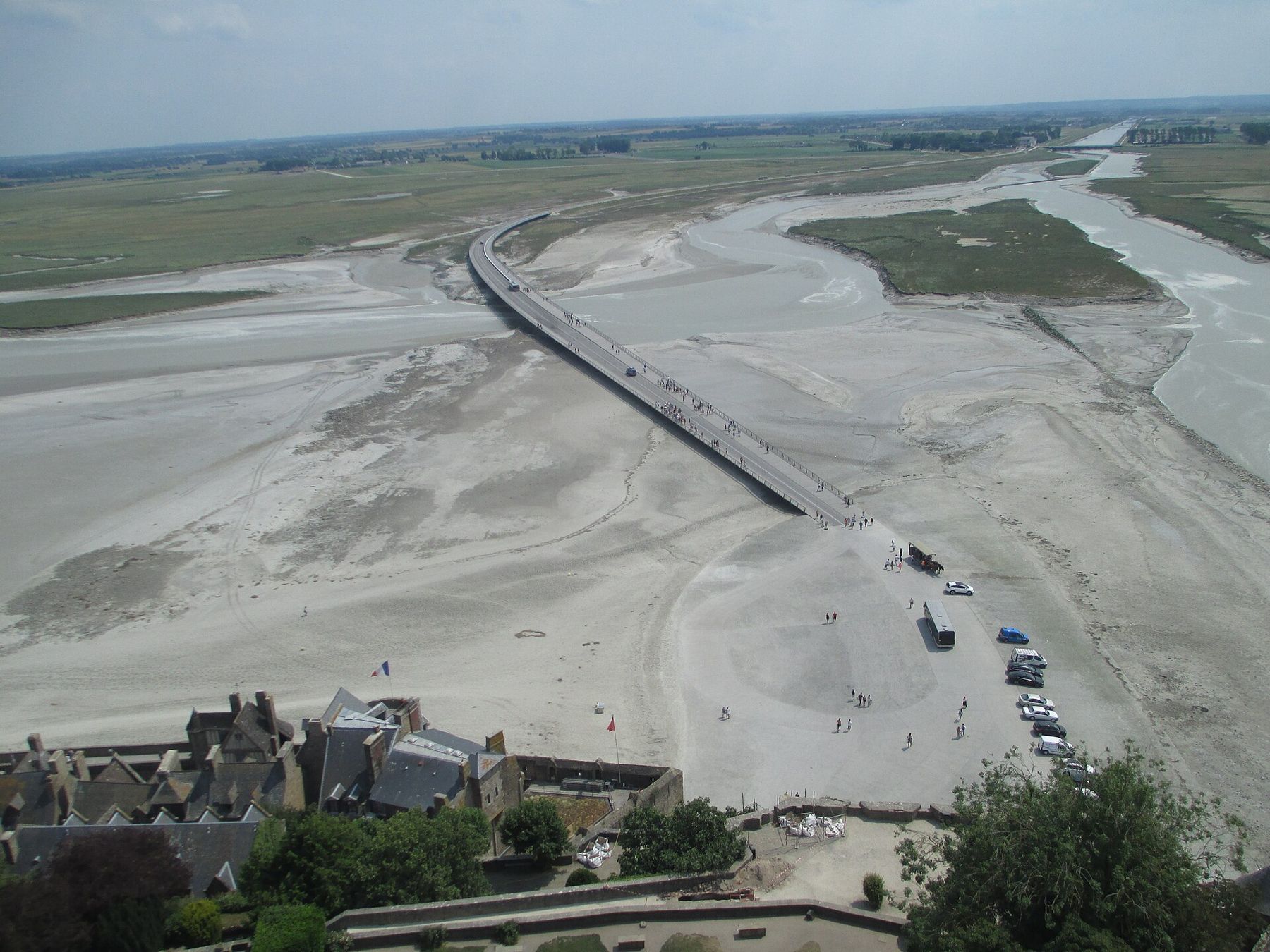
The Mont is joined to the mainland by a long, slightly curved causeway that ends in a footbridge close to the walls. Shuttles run along it from the visitor area on the mainland, and you can also walk; the walk takes the best part of an hour at a steady pace, and it is the better choice for photographs, because the Mont grows in the frame as you go.
The classic view is from the south, looking north along the causeway with the rock filling the end of the line. The causeway itself becomes your lead-in. Early and late in the day, the long shadows of walkers and the low light across the flats add texture; in the middle of the day the view flattens.
Because you look roughly north from the mainland, the season changes everything. In winter the sun rises and sets well to the south, behind you, so both morning and evening light fall across the face of the Mont. In summer the sun rises and sets further north, so the Mont is side-lit or backlit at the ends of the day, which suits silhouettes and glowing skies more than detail.
Sunset from the dam on the Couesnon
The river Couesnon runs out to the bay just beside the Mont, and on the mainland a dam controls its flow, flushing silt away from the rock. The dam has a broad walkway and steps, and the paths along the river bank beyond it are among the best places to watch the sun go down.
From here the Mont sits a little way off with the river and the flats in front of it. In the evening the sun drops to your left, and in autumn and winter it lights the western side of the rock in gold while the sky behind turns pink. Stay after sunset: the walls and the abbey are lit at night, and the short spell of blue hour, when the lamps balance the sky, is often the best frame of the day. The notes on getting blue hour right help with exposure.
When the tide has just left, or after rain, the sand and the shallow channels near the river hold water. Get low and close to a sheet of wet sand and the Mont doubles in it. These reflections last only until the surface dries or the next wind ruffles it, so work quickly.
Spring tides and high water
The tides here follow the moon. The biggest ones, the spring tides, come a day or two after new and full moon, and the very largest fall near the spring and autumn equinoxes. On those days the water comes in fast, fills the bay around the rock and, for a short time, can cover the far end of the causeway. Access is sometimes paused while the sea is up.
These are the days when the Mont looks most like an island, and they draw crowds of their own. The tide timetable is published well in advance, so check it before you plan your visit, and arrive an hour or so before high water to be in position. Watch from the dam, from the causeway, or from the ramparts of the village looking out, and follow any instructions from staff when access closes.
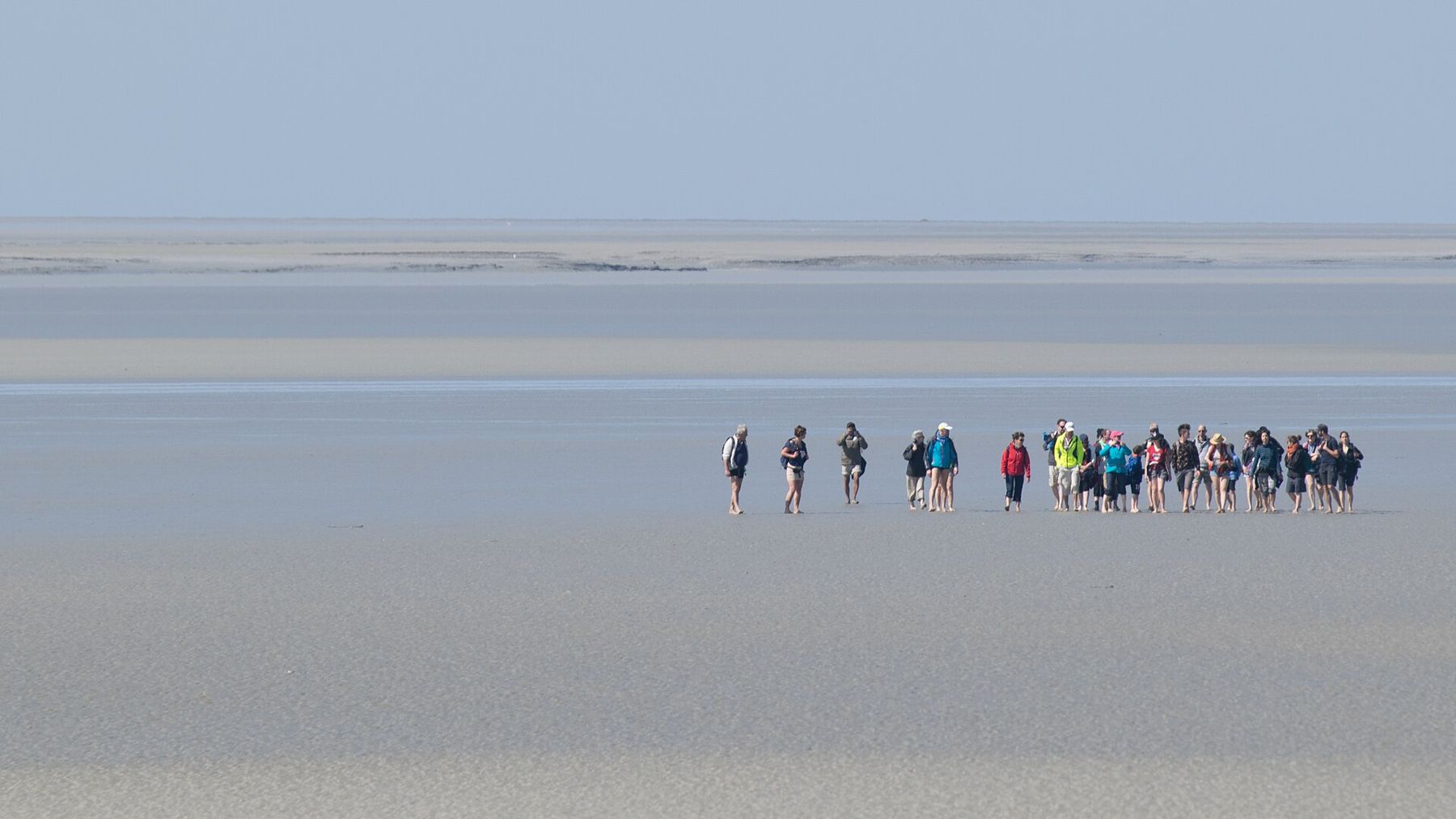
On ordinary days the bay is more often sand than sea. That has its own beauty: channels that catch the light, sheep grazing on the salt meadows near the shore, and walkers crossing far out on the flats.
The tide timetable is published well in advance, so check it before you plan your visit, and arrive an hour or so before high water to be in position.
The village, the abbey and the view down
Inside the walls, a single main street climbs steeply towards the abbey. By late morning it is packed shoulder to shoulder. Arrive early or wait until late afternoon, when the day visitors drain away, and the lanes, steps and side passages become worth photographing in their own right.
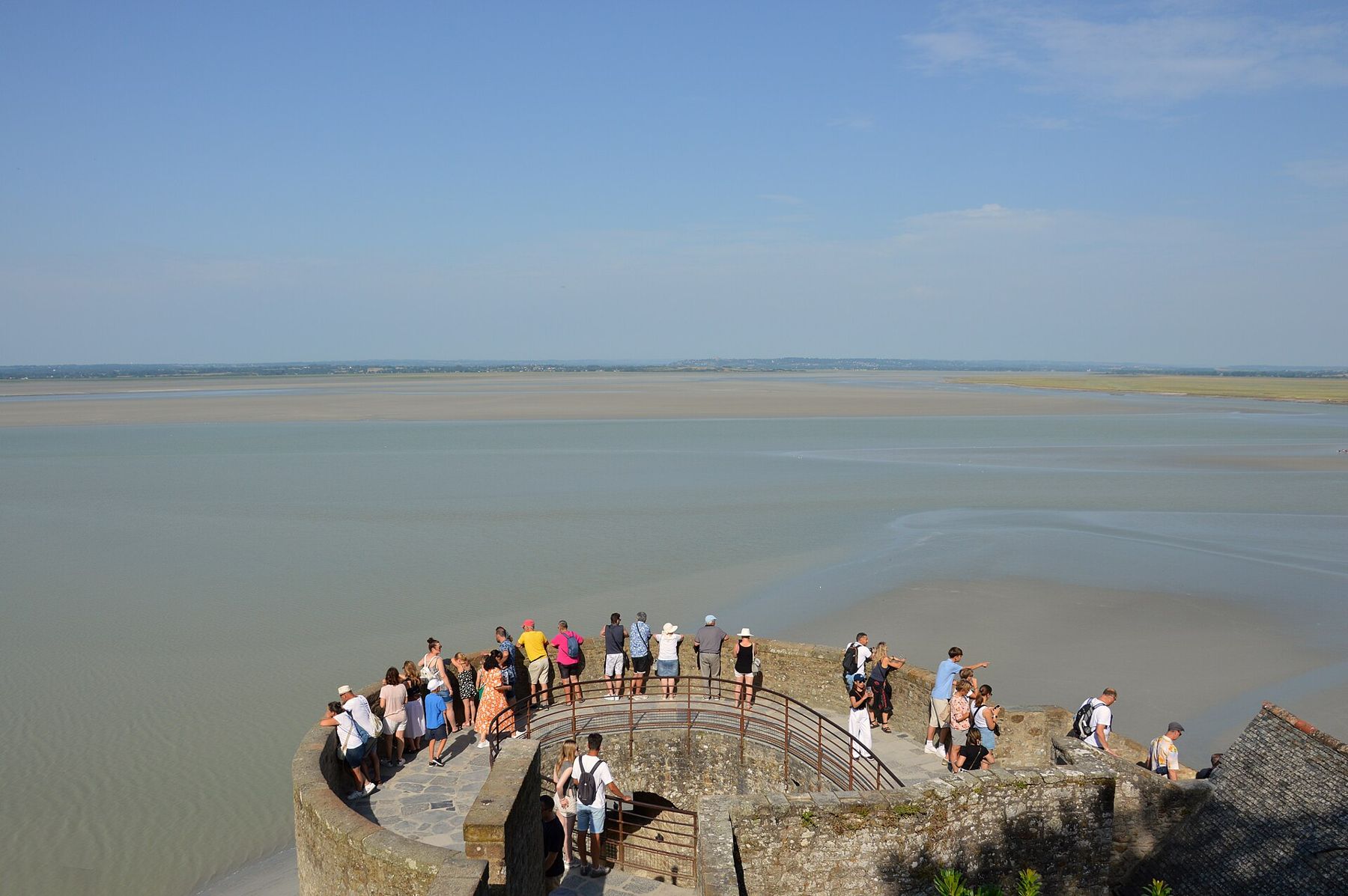
At the top, the abbey looks down over the whole bay. From its terraces and the ramparts below you can see the causeway running back to the mainland, the river channel winding through the flats, and on a clear day the coast of Normandy and Brittany on either side. A short telephoto picks out walkers on the sand and the patterns of the channels.
Inside, the abbey church, the cloister and the great halls are dim, and the cloister in particular rewards a patient eye for the rhythm of its columns. Opening times change by season, and on some summer evenings there may be later visits; check before you go. Tripods are generally not welcome in narrow, busy interiors, so ask at the entrance rather than assume, and see the general tripod rules.
Out on the sand, only with a guide
Walking out into the bay is one of the great experiences here, and one of the most dangerous if you get it wrong. The tide comes in quickly across flat ground, there are areas of quicksand, and sea fog can roll in and remove every landmark within minutes. Never walk out on your own. Join a crossing led by a qualified bay guide, who knows the routes and the timing.
With a guide you can photograph the Mont from angles almost no one else sees: from the west across open sand, from the far side of the river channel, from the middle of the bay with only water and sky around it. Bring a small bag, keep your camera on a strap, and expect to wade. Drones are not allowed over the Mont, so the view from the sand is your bird's-eye alternative.
Grey days work well out here. Soft light brings out the subtle tones of sand and water, and the outline of the Mont against a pale sky is strong in any weather; see why overcast days are a gift. Autumn and spring give the most varied skies and the biggest tides with fewer crowds than midsummer.