Frames from Europe · Schwangau
Neuschwanstein from the Marienbrücke and beyond
The bridge over the gorge gives the famous view, but it is often closed or packed. Morning light, the fields below and a winter visit give you other ways in.
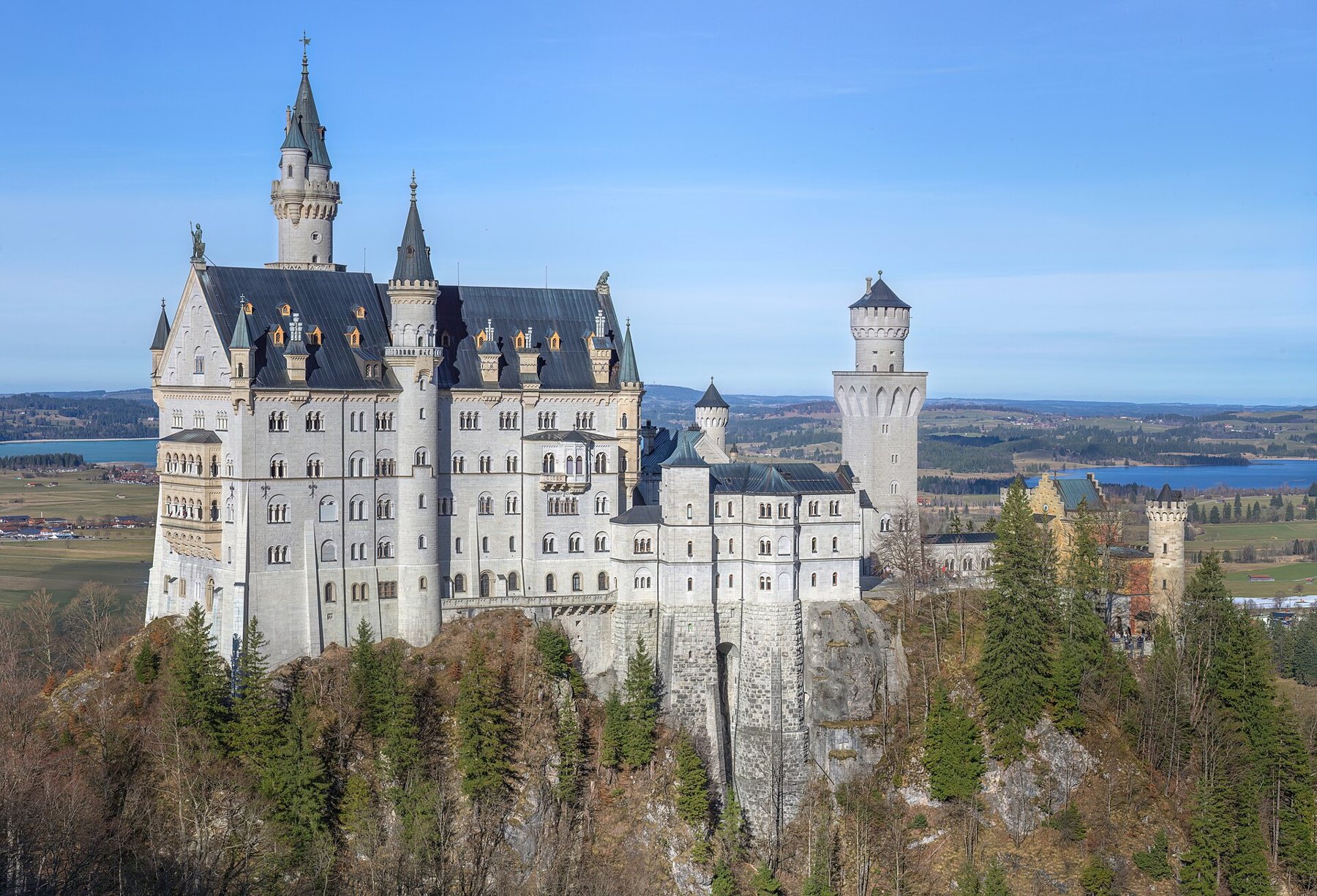
Neuschwanstein Castle sits on a rocky ridge above the Pöllat gorge, with the Alps rising behind it and the flat land around Füssen and Schwangau spread out in front. It is one of the most photographed buildings in Europe, and most of those photographs are taken from one spot: the Marienbrücke, a narrow iron bridge that spans the gorge above a waterfall.
That view is worth the effort, but it is not the only one, and it is not always available. The bridge is closed at times for maintenance and safety work, in snow and ice, and when crowds become too heavy. Knowing the other angles turns a closed bridge from a disaster into a change of plan.
The view from the Marienbrücke
From the bridge you see the castle almost side-on, its white walls and towers standing above the trees, with the plain and lakes stretching out beyond. A normal wide lens takes in the whole scene; a short telephoto lets you frame the castle tighter against the distant lakes.
The bridge is narrow, it can move a little when it is crowded, and at peak times there may be a queue to get on and limits on how long you stay. Shoot quickly, step aside, and do not climb or lean out over the railings. Check whether the bridge is open before you walk up; closures are announced locally and can last for long periods.
Morning light on the east side
The side of the castle you see from the bridge takes the light best in the morning, when the sun comes from the east. As the day goes on the sun moves round behind the castle, from the bridge's point of view, and the white walls fall into shade against a bright sky. Plan to reach the bridge early, which also means fewer people. In the afternoon, the fields below are the better place to be.
Haze often builds over the plain on warm days, softening the lakes in the background. Clear, crisp mornings after rain or a cold front give the sharpest views.
The pale stone is easy to overexpose. On a phone, tap on the castle walls and pull the brightness down a little until the towers keep their detail; the dark forest below can go deeper without harm. On a small camera, check the highlights after every few frames, because a bright sky and white walls fool the meter in different ways as the light changes.
From the fields below
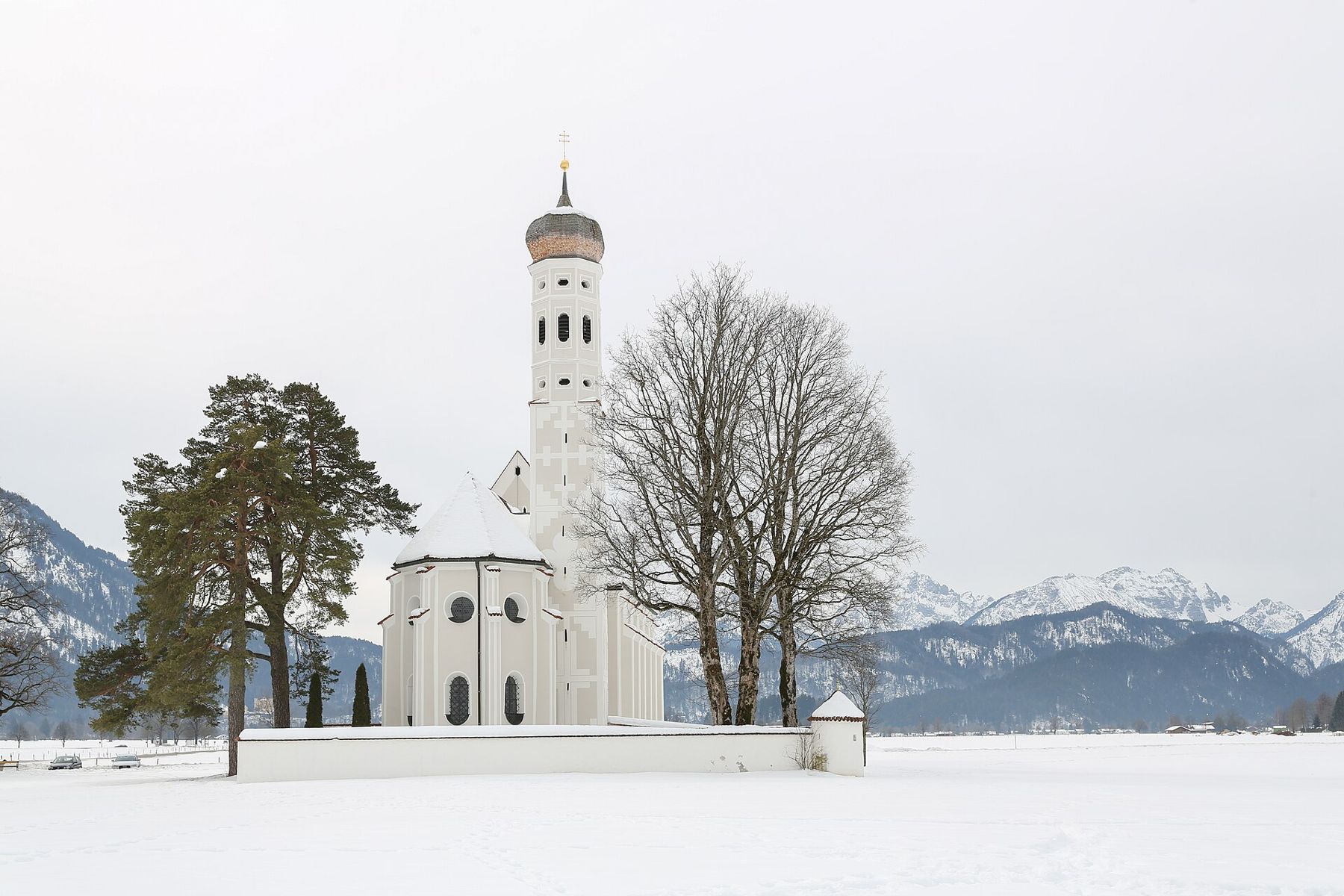
The castle stands high enough to be seen from the valley floor, and some of the most peaceful views are from below. Around Schwangau, the meadows near the small baroque church of St. Coloman give a classic frame: the church in the foreground, open fields, and the castle on its ridge against the mountains. Late afternoon and evening light falls well on this side, and the walk across the fields is quiet even when the castle is busy.
A telephoto helps here, because the castle is some distance away. Look for lines in the land, rows of trees, fences and paths, to lead the eye towards it. Stay on paths and farm tracks; the meadows are working land.
Autumn colour and winter
In autumn, usually through October, the beech and maple trees on the slopes below the castle turn yellow, orange and red. Against the white walls and a blue sky this is the most colourful time of year, and mornings can bring low mist over the plain that clears as the sun climbs.
Winter is quieter and can be beautiful, with snow on the roofs and the forest. It is also the season when the bridge is most likely to be closed and the paths most likely to be icy. Check conditions before you go and wear shoes with grip. If the bridge is shut, the fields around St. Coloman covered in snow make a strong alternative.
Grey, overcast days are kinder here than you might expect. The white castle stands out against a pale sky, and soft light suits the forest and the gorge; see the notes on overcast days.
When the bridge empties
Neuschwanstein draws very large numbers of visitors, especially in summer and at weekends. Tours of the interior run on timed tickets, and the area fills from mid-morning. The best times for the bridge and the paths around it are early morning, before the tour groups arrive, and weekdays outside the summer holidays. The general advice on beating crowds without getting up at four applies well here.
The walk up from the village to the castle takes a while and climbs steadily. Buses and horse-drawn carriages also run part of the way at some times of year; check what is running on the day.
The rules around the castle
Photography inside the castle is not allowed, so the interior tour is one to enjoy without a camera. Tickets for tours are sold through the official system and timings change, so check before you go rather than expecting to buy at the door.
Drones are not allowed over the castle and its grounds. Tripods may be impractical or unwelcome on the bridge and the busy paths near the entrance; ask staff if in doubt, and see the general tripod rules. Respect closures and fences on the paths through the gorge, which can be slippery and dangerous after rain.
Above all, give yourself time. Neuschwanstein rewards a visitor who comes early, watches the light, and is ready to walk to a different viewpoint when the famous one is closed.