Darkroom notes · Any place
A field kit that fits under an airline seat
One camera, two lenses and a handful of small things. A kit that fits under the seat in front of you covers almost every travel picture, and leaves your hands free for the trip.
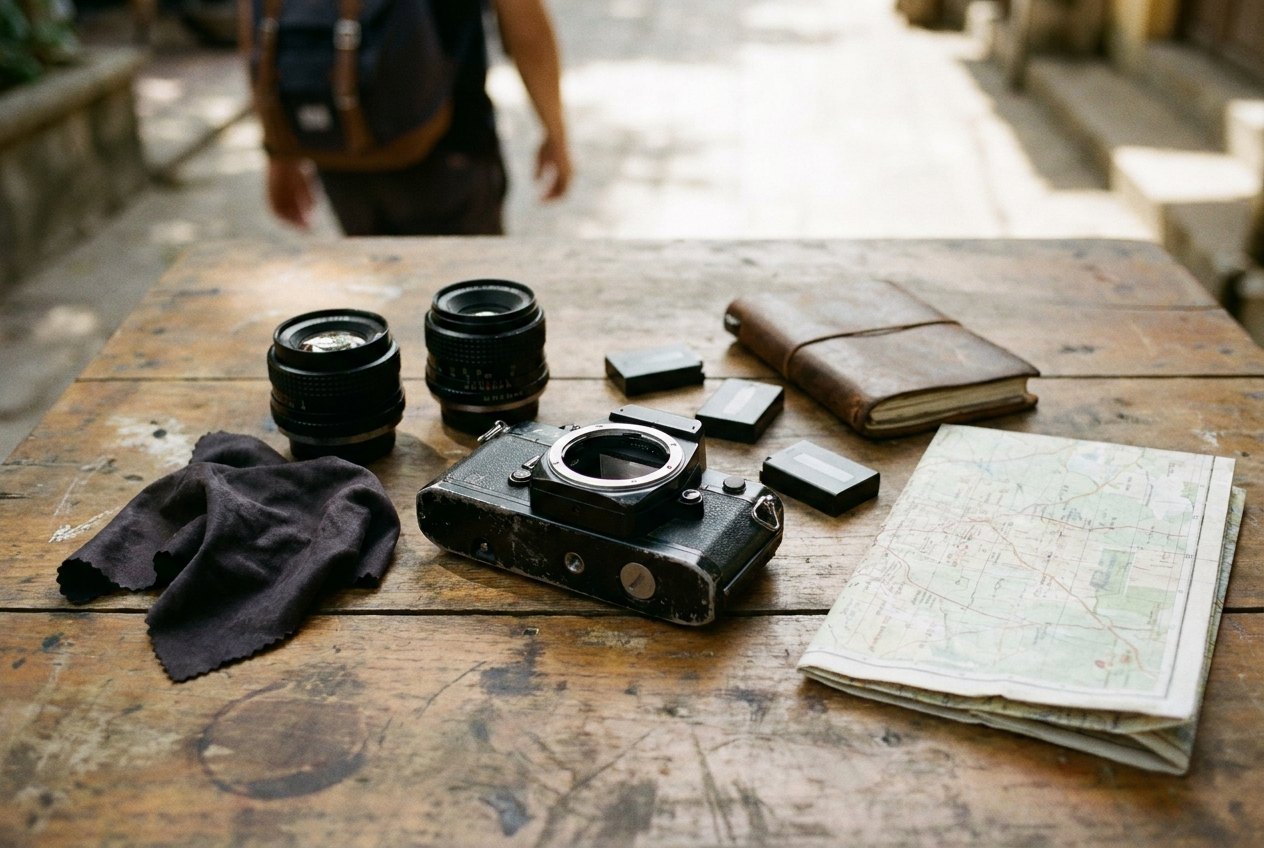
Heavy camera bags have a way of staying in hotel rooms. The kit that makes the best travel pictures is the one you actually carry all day, through airports, up stairs and into crowds, without it becoming a chore. For most trips, everything you need fits in a small bag under the seat in front of you, with room left for a jumper.
One body is enough
A single camera body covers almost every travel situation. Two bodies make sense for working professionals who cannot afford to swap lenses; for travel, they double the weight and halve the freedom.
Your phone is the backup body. It is always with you, it handles wide views and night scenes surprisingly well, and it does not need a separate bag. Think of the camera and the phone as a pair rather than buying a second camera for the trip.
If you are choosing a camera for travel, weight and size matter more than the last bit of image quality. A camera that fits a jacket pocket or a small bag will be used far more than a big one left behind.
Two lenses, chosen well
Two lenses cover most of what you will see on a trip:
- A small, wide-to-normal zoom. For streets, buildings, interiors and landscapes. It stays on the camera most of the time.
- A longer zoom or a light telephoto. For details on buildings, compressed views of distant ridges, and candid moments from a distance.
Some photographers swap the second lens for a small, fast prime, a lens with a single focal length that lets in a lot of light, for evenings and interiors. Either works. What does not work is bringing four lenses and changing them constantly; you miss pictures, and dust gets in.
The longer lens earns its place at the big landscapes. At the Grand Canyon, for instance, it pulls layers of ridges together in a way a wide lens cannot.
The small things that save a day
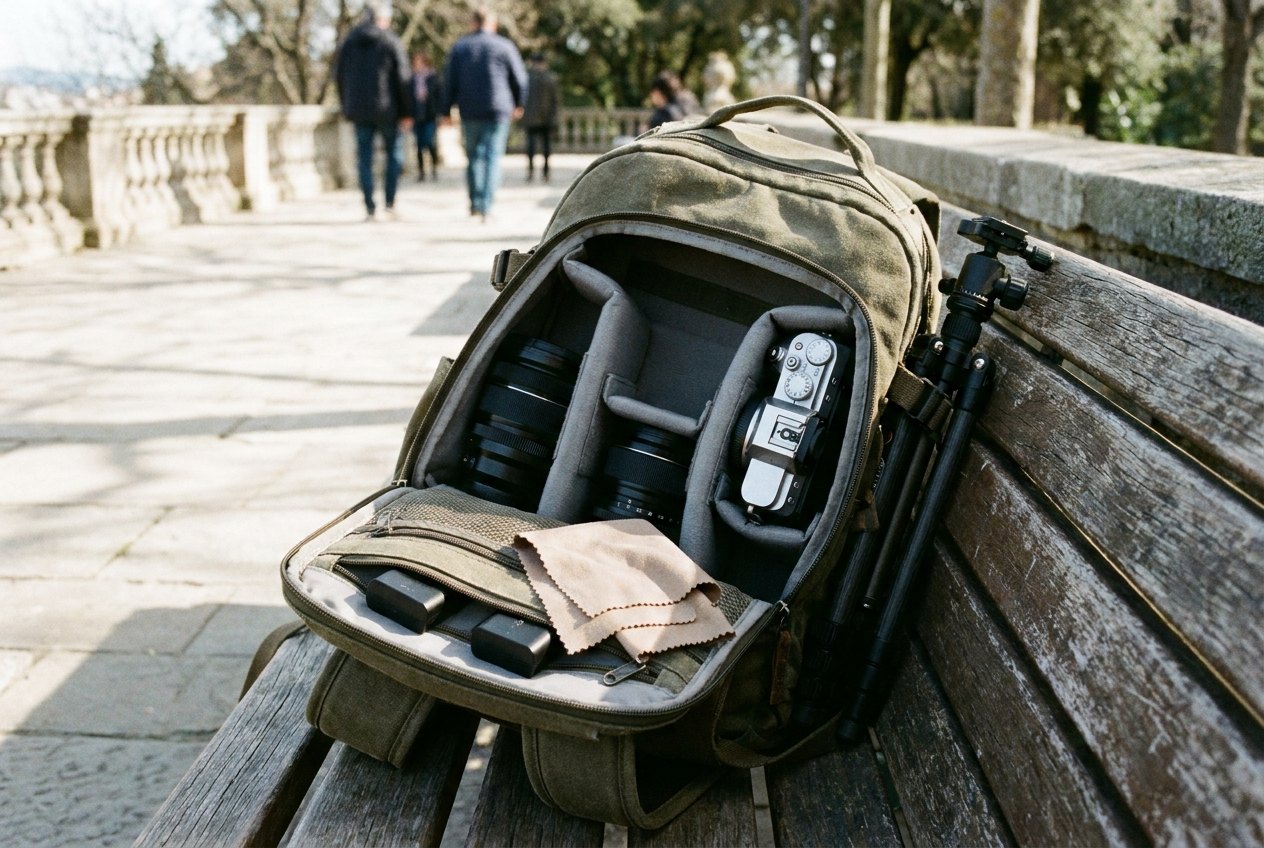
These take little room and prevent most of the problems that end a day's shooting early.
- Batteries. At least two spares. Cold weather and long days drain them faster than you expect.
- Memory cards. Several smaller cards rather than one big one, so a lost or failed card does not take the whole trip with it.
- Lens cloths. Two: one clean for the lens, one for drying rain and sweat.
- A soft blower or brush. For dust on the lens, especially in sand and wind.
- A charger and cable. Check that it works with the voltage and plugs where you are going.
- A small zip bag. For rain, dust and sand. Places such as Monument Valley will test it.
Back up as you go. Copy the day's pictures to a phone, a laptop or a small drive each evening, and keep the copy in a different bag from the camera. Losing a camera is bad; losing every picture of the trip with it is worse.
A light support, not a full tripod
A full-size tripod is the single heaviest thing most travellers carry, and many famous sights will not let you use it anyway. A small support covers most needs:
- A short tabletop stand with bendable legs, to put the camera on a wall or a bench.
- A small beanbag or a rolled scarf, to level the camera on stone or a railing.
- A strap wrapped around your wrist, to brace a handheld shot in low light.
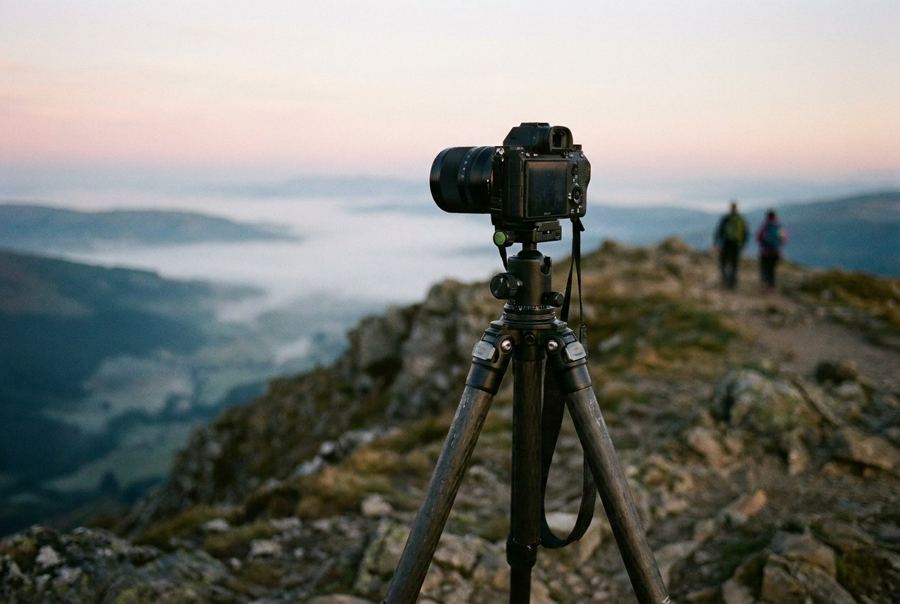
Combined with a self-timer and a steady surface, these give you sharp blue-hour and interior pictures in most places. If a trip is built around long exposures, such as night landscapes or waterfalls, a light travel tripod may be worth packing, but check whether the places you visit allow it first.
The weight you can drop
Pack the bag, then take out a third of it. Typical things that come home unused:
- A third or fourth lens for a just-in-case situation that never comes.
- A flash, for most travel photographers; at heritage sites flash is often not allowed, and soft natural light looks better.
- A pile of filters. One, perhaps a polariser for skies and reflections, is plenty.
- A big padded bag. A small one with a padded insert carries the same kit and does not mark you out as carrying something valuable.
Drones deserve a special word. Many countries and most heritage sites restrict or ban them, and rules on carrying them through airports vary. Unless you have checked the rules for every place on your route, leave it at home.
Through security without trouble
Airport rules change, and they differ by country and airline, so check before you fly. In general terms:
- Keep the camera, lenses and batteries in your cabin bag, not in the hold.
- Spare lithium batteries are normally required in hand luggage, often with the contacts covered. Tape or a small case does it.
- Be ready to take the camera out at the scanner, and have it easy to reach.
- If you shoot film, ask for a hand check rather than sending rolls through the scanner repeatedly.
- Know your airline's cabin size and weight limits. A compact kit that fits under the seat is far less likely to be challenged at the gate.
Pack it the same way every time, so you notice at once when something is missing. A light, simple kit is easier to pack, easier to carry and easier to keep track of, and it lets you spend the trip looking at the place rather than at your bag.