Frames from the Americas · Grand Canyon
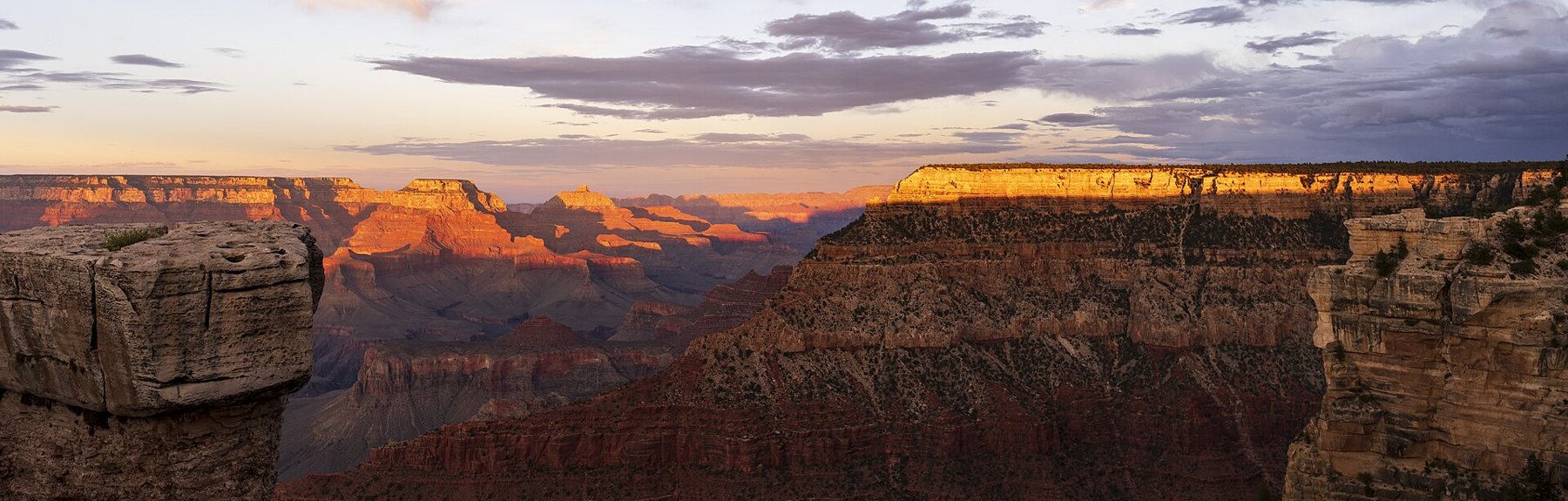
The South Rim in its last light
Mather Point for the first sun, Hopi Point for the last, and the storms of late summer in between: how to read the canyon's light from the rim.
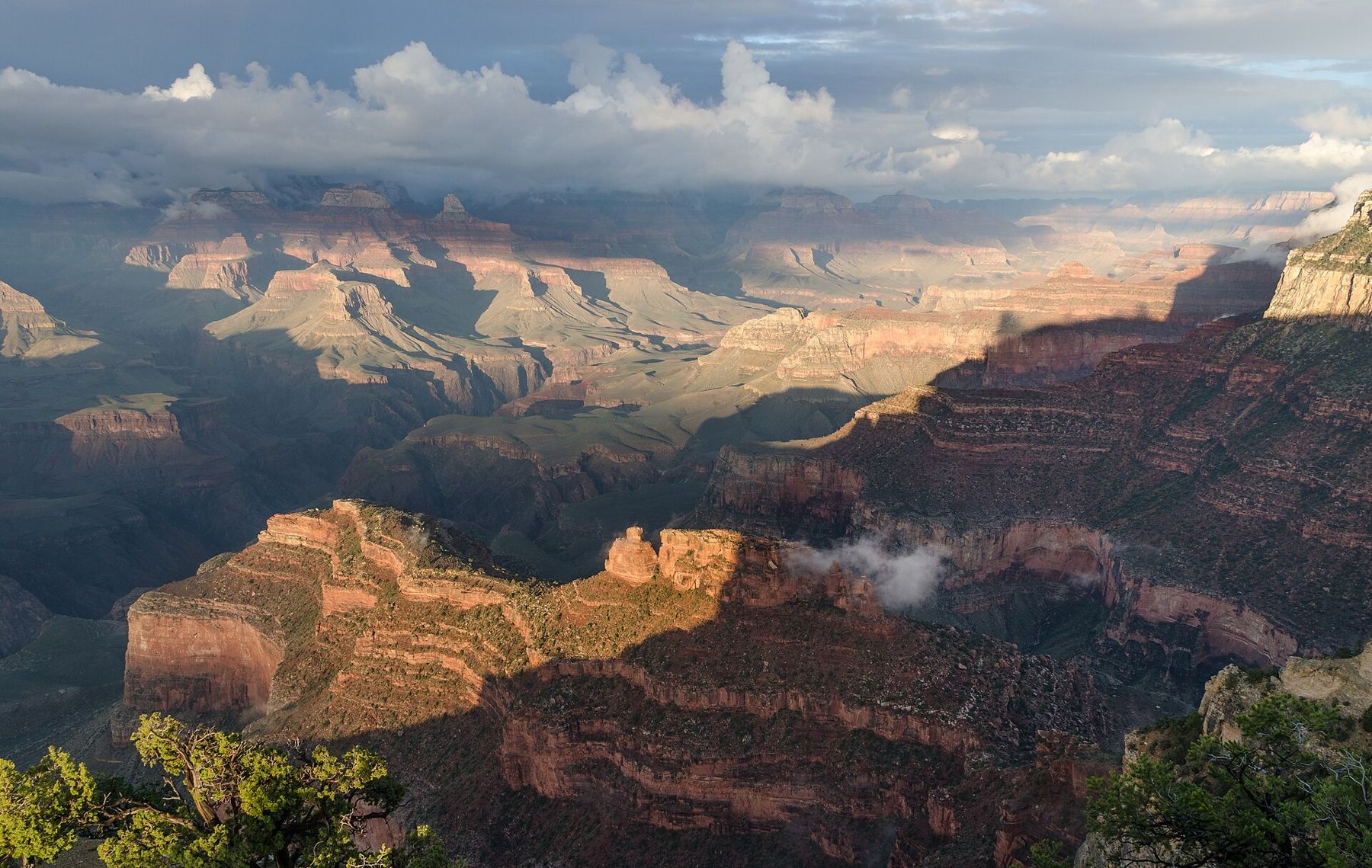
The Grand Canyon is hard to photograph at noon. The sun sits high, the shadows fall straight down into the side canyons, and miles of rock flatten into one pale, hazy wall. Give it two hours either side of sunrise or sunset and the same view breaks into layers: ridges in front of ridges, each one a shade cooler than the last, with the rim catching light while the depths stay blue.
The South Rim of Grand Canyon National Park runs roughly east to west, and you look north across the gorge. That matters. Morning and evening sun reaches the canyon from the side rather than from behind you, so the buttes and temples get modelled with light on one face and shadow on the other. That side light is the whole game here.
Two points, two ends of the day
Mather Point for the first sun
Mather Point sits close to the main visitor centre, so it is the easiest viewpoint to reach in the dark. Two rocky fingers push out from the rim, and from either one you can frame the canyon running away to the east, where the sun comes up. In the first minutes the light skims across the top of the far rim and lights the highest buttes first, while the inner gorge is still in shade. Turn round as well: the cliffs on your left and right go orange long before the depths do.
Because it is so easy to reach, Mather Point is also the busiest sunrise spot. If you want room, walk the Rim Trail a little way west towards Yavapai Point. The paved path follows the edge, and every few minutes it opens onto a quieter ledge with much the same view.
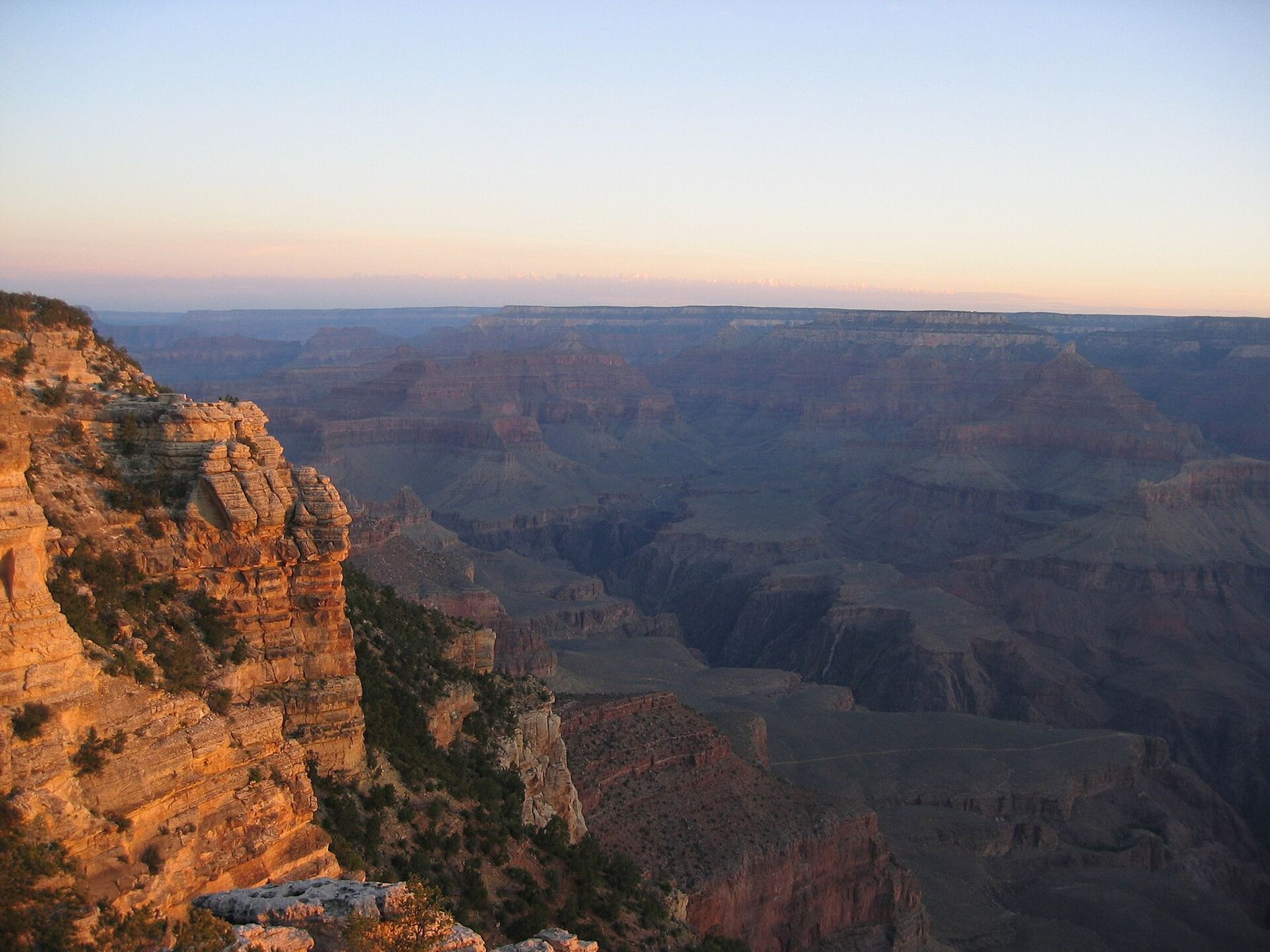
Hopi Point for the last
Hopi Point, out along Hermit Road west of the village, is the classic sunset viewpoint, and for good reason. It sticks far out into the canyon, so you can look east into the lit side of the buttes and west towards the sun, and on a clear evening you can pick out a stretch of the Colorado River far below. Mohave Point and Powell Point nearby give similar views with slightly different foregrounds.
For much of the year private cars are kept off Hermit Road and a free shuttle bus runs out along it instead, stopping at each viewpoint. The season and the last bus back change, so check at the visitor centre on the day. At sunset the queue for the return bus can be long; it is worth staying on for the afterglow and catching a later bus rather than leaving at the peak.
Reading the canyon's layers
The canyon is so deep and so wide that the air itself becomes part of the picture. On a dry, clear morning the far rim looks sharp and close. On a hazy afternoon the distant ridges fade into a soft blue, and each step back is paler than the one in front. Neither is wrong; they just ask for different pictures.
- Clear air: go wide and include a strong foreground, such as a gnarled pine or a rock ledge, so the eye has somewhere to start.
- Haze: use a longer lens and stack the ridges on top of each other. Haze turns layers into shapes, and that compression is often the stronger picture.
- Midday: look for clouds. A passing cloud throws a moving shadow across the buttes and puts back the depth the high sun took away.
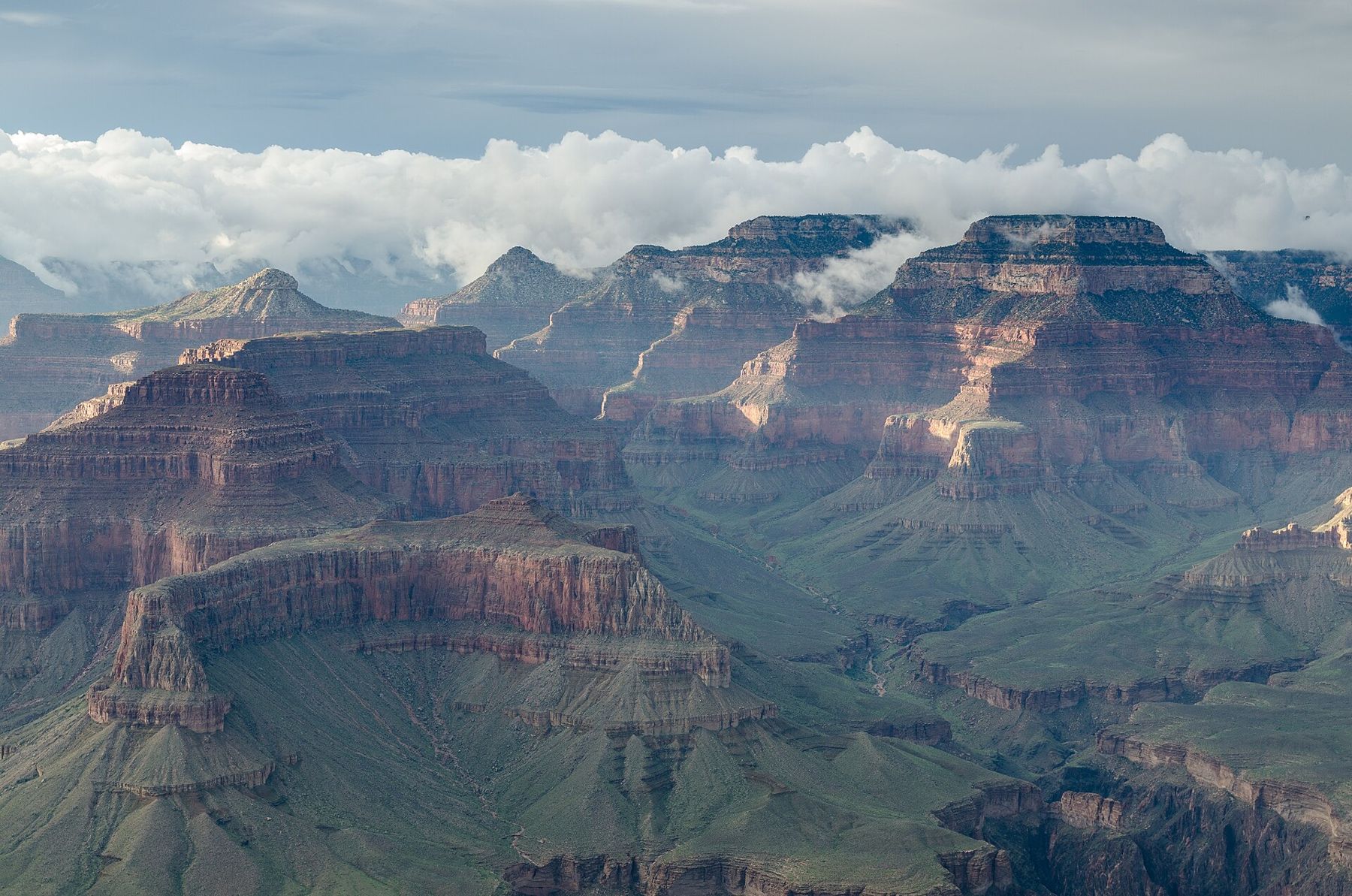
Exposure is the other trap. When the rim is lit and the inner canyon is in deep shade, the camera cannot hold both. Expose for the bright rock and let the depths go dark, or wait a few minutes until the sun drops and the difference between them narrows. A phone's high-contrast mode helps, but it can make the sky look grey and flat if you push it.
Storm season and the late-summer sky
From roughly July into September, monsoon storms build over the plateau most afternoons. They are the best light the canyon gets all year and also the most dangerous. A storm that breaks over the far rim can send shafts of sun down through the clouds into the gorge, and a rainbow often follows when the sun comes out behind you.
The rim is high, exposed and lightning-prone. When thunder is close, leave the points and the railings, get back into a building or a closed vehicle, and wait it out. No picture is worth standing on a promontory in a thunderstorm. The upside is that the storms usually clear late in the day, and the washed air after rain is the clearest you will see.
Winter brings a different gift. The South Rim sits high enough for snow, and a dusting on the ledges outlines every layer of rock in white. Roads and trails can be icy, so check conditions, and carry traction for your shoes.
Staying behind the rails
Many viewpoints have railings, but long stretches of the Rim Trail have none, and the drop is immediate. People fall here every year, and a good number of them were stepping back for a picture. Set your feet before you raise the camera, and never walk backwards while looking at a screen.
Set your feet before you raise the camera, and never walk backwards while looking at a screen.
- Do not climb over railings or onto loose ledges for a cleaner frame. A slightly wider shot that includes a bit of rail is fine.
- Tripods are fine at the viewpoints, but keep the legs inside the barrier and out of the walkway at busy sunsets.
- Drones are not allowed in US national parks. Leave yours in the car.
- Bring a headlamp for sunrise and the walk back after dusk; the paths along the rim are dark.
Hiking below the rim is a separate subject, and the heat and the climb back out are serious. Even a short walk down a trail like the Bright Angel changes the picture, though: the rim rises above you and the canyon starts to wrap around you instead of spreading out below.
A day on the rim, hour by hour
| Time | Where | What to look for |
|---|---|---|
| Before sunrise | Mather or Yavapai Point | First light on the high buttes; the east glows |
| Mid-morning | Rim Trail through the village | Shade in side canyons, small details, ravens |
| Midday | Desert View Drive viewpoints | Cloud shadows; the river from the eastern points |
| Late afternoon | Hermit Road by shuttle | Side light building on the temples |
| Sunset and after | Hopi, Mohave or Powell Point | Last light on the rim, then a cool blue canyon |
If you have a second evening, try a different point rather than repeating the same one. The canyon changes so much with each bend of the rim that two viewpoints a few minutes apart feel like two different places, and the pictures you make on the second night are usually better because you already know where the light will land.
The same patient approach works at other big landscape sites, from the tilted grass of Seceda above Val Gardena to the tidal bay around Mont-Saint-Michel: find where the side light falls, and arrive before it does. The red buttes of Monument Valley are a few hours' drive to the north-east if you want a second desert at the other end of the day.