Darkroom notes · Any place
Tripod rules at famous sights, in general terms
Bans, permits, grey areas and polite questions: what tripod rules usually mean at monuments, museums and parks, and how to get a steady picture when three legs are not welcome.
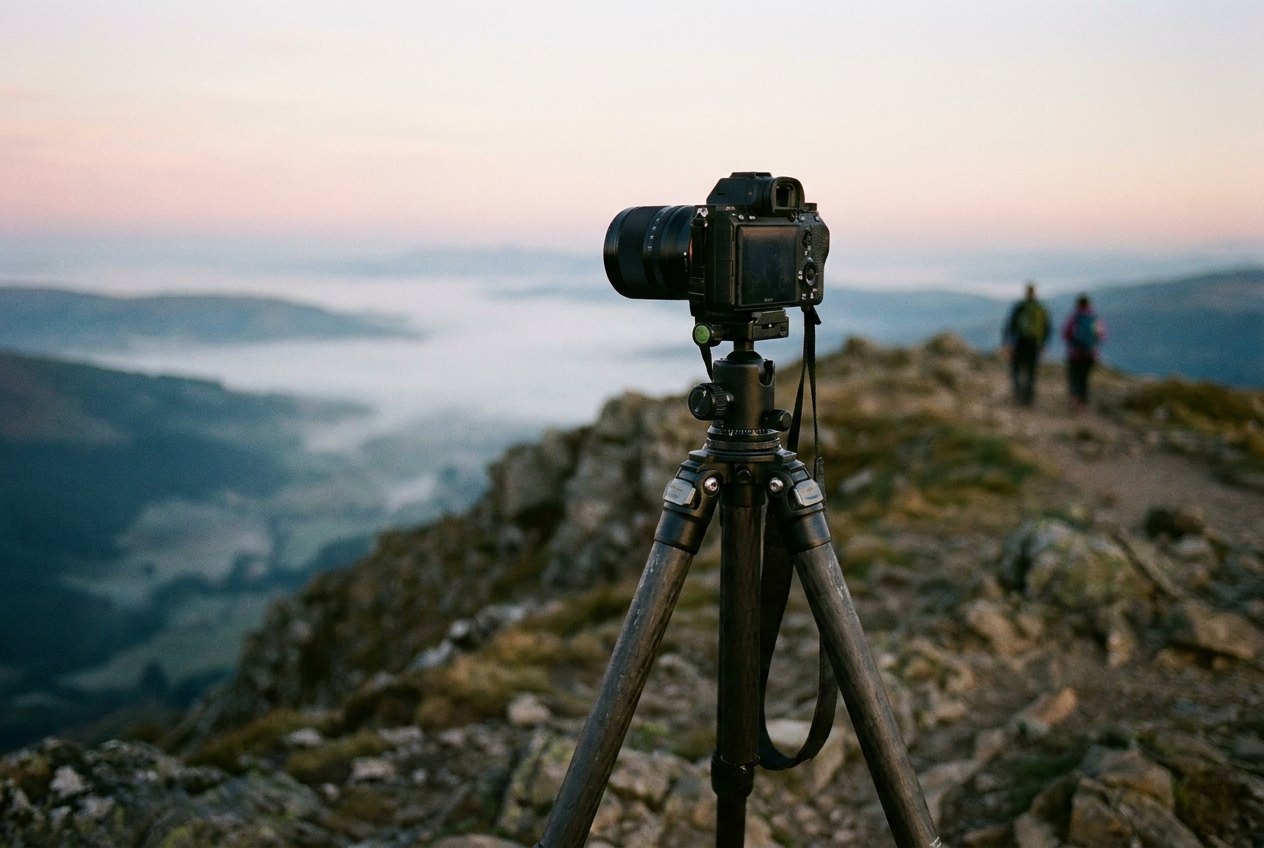
Few things cause more confusion at the gate than a tripod. One site waves it through, the next confiscates it at security, a third lets you carry it but not open it. The rules look random until you see the reasons behind them, and once you do, you can usually guess what a place will say before you ask.
Why the legs get stopped
Sites ban or limit tripods for a handful of reasons, and most rules are a mix of them.
- Crowds and safety. Three legs spread across a narrow path or a staircase trip people. At a packed viewpoint, one tripod takes the space of three visitors.
- Damage. Metal feet scratch mosaic floors, chip old stone and dig into soft ground. Heritage managers treat every hard point touching the monument as a risk.
- Commercial filming. A tripod looks professional. Many places charge for commercial shoots, and a blanket ban is the simplest way to stop unpaid ones.
- Security. At some sites anything that could be swung or hidden inside is stopped at the scanner, whatever you meant to do with it.
Knowing which reason applies tells you where the line is. If the worry is crowds, a tripod may be fine at quiet hours. If it is commercial filming, a permit is the answer. If it is security, nothing you say will change it.
Bans, permits and grey areas
Rules fall roughly into four groups.
| Rule | What it usually means |
|---|---|
| Not allowed | Stopped at the gate or scanner; sometimes stored, sometimes refused |
| Restricted | Allowed in some areas or hours, or with a permit |
| Allowed | Fine for personal pictures, as long as you block nobody |
| Unwritten | Nobody has said no yet; a guard may say so on the day |
The famous monuments tend to sit at the strict end. The Taj Mahal and Machu Picchu keep tripods out in general, and many museums and religious buildings do the same indoors. Open landscapes such as national parks are usually more relaxed for personal use, though drones are a different matter and are banned far more widely than tripods.
A permit, where one exists, is normally aimed at commercial or professional work. For a traveller taking personal pictures it is rarely worth the cost and paperwork, unless the place says plainly that personal tripods need one too.
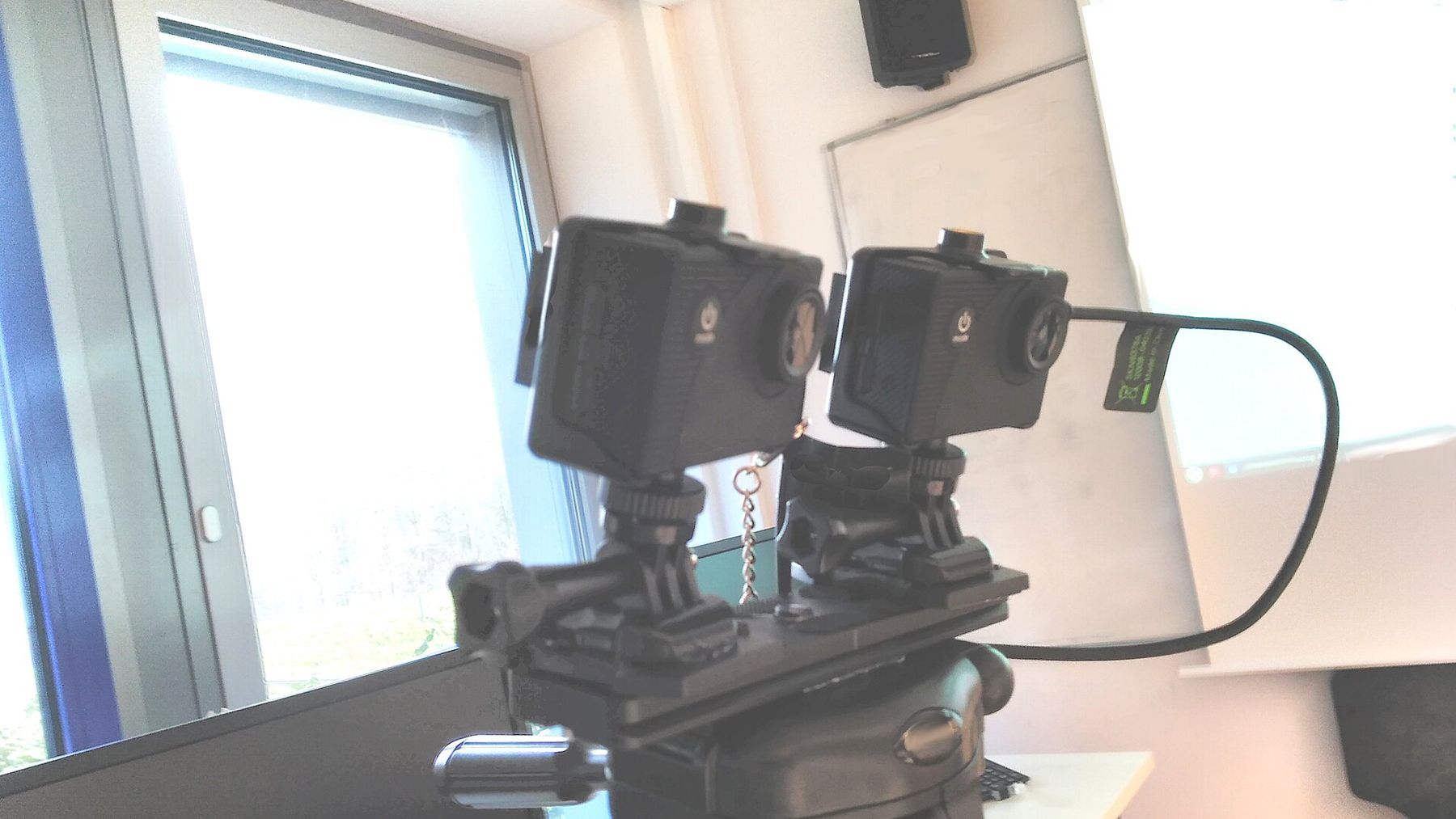
Monopods, table supports and clamps
A single leg is not automatically treated as a tripod. Some places that ban tripods allow monopods, on the grounds that they take no more room than a walking stick. Others ban any camera support at all. Many security staff will not know the difference, so you may need to explain, politely, and accept the answer.
Small table supports, the kind with short bendable legs, are the grey area that most travellers live in. They fit in a pocket, stand on a wall or a bench, and do not look like professional kit. They are often tolerated where a full tripod is not, but where the rule says no camera supports, that includes them. Clamps on railings are another option, but never fix anything to historic stonework, gates or fences that are part of a monument.
The cheapest support of all is a small beanbag or a rolled-up scarf. Rest the camera on a wall, a bin or a step, set a two-second timer so your finger does not shake it, and you have most of what a tripod gives you.
Asking at the gate
Rules change, and the website, the sign at the entrance and the guard in front of you do not always agree. When it matters, ask at the entrance before you set anything up. A short, friendly question gets a better answer than a defensive one.
- Ask whether personal photography with a small tripod or support is allowed, and where.
- If the answer is no, ask whether there is a place to leave it, or whether it needs to go back to your room.
- If the answer is yes, ask whether certain areas or hours are excluded.
- Accept the answer on the day, even if it differs from what you read.
Arguing with a guard about the official rule rarely ends well. If you think the answer was wrong, take it up later through the proper channel, not at the gate with a queue behind you.
Shooting steady without one
Modern cameras and phones are far steadier than they used to be. Image stabilisation, higher usable sensitivity and phone night modes mean that most pictures that once needed a tripod can be made handheld, with some care.
- Brace yourself: elbows against your ribs, or a shoulder against a column.
- Breathe out slowly and press the shutter at the end of the breath.
- Take several frames in a burst. One of them is usually sharper than the rest.
- Use a wall, rail or step as a support, without leaning on anything fragile.
- Accept a little noise at night rather than a blurred picture. Noise looks like grain; blur looks like a mistake.
The one thing a tripod still does best is the long exposure: water turned to mist, crowds turned to ghosts, the trails of lights at night. If those are the pictures you want, plan for a place and an hour where tripods are welcome, rather than bringing one to a site that will refuse it.
Respect beats the perfect frame
Even where a tripod is allowed, it comes with manners. Keep the legs inside barriers and out of the walkway. Do not set up in the one spot everyone needs to stand in for the same view, then leave the camera there while you wait for the light. Fold it up and step aside when a group comes through.
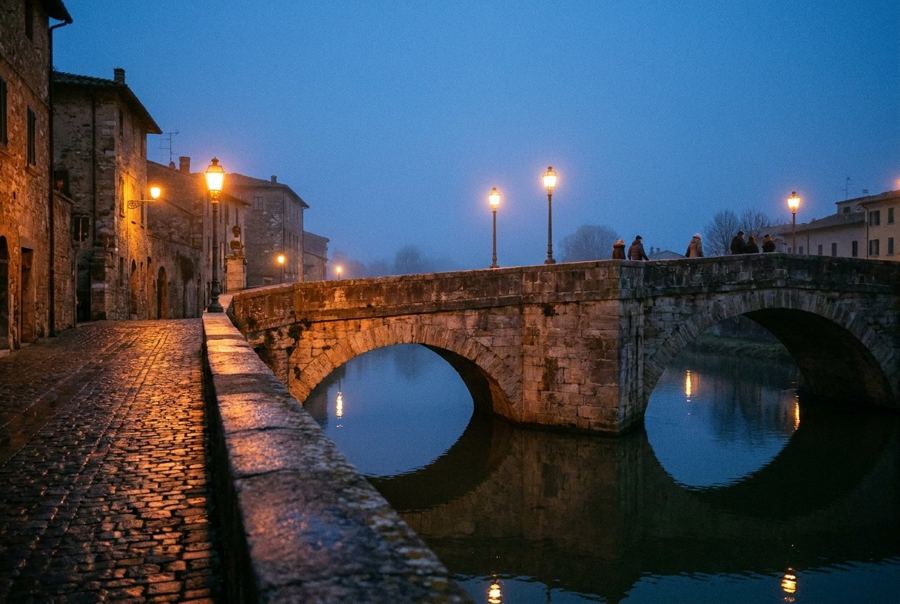
At busy places such as the Rialto Bridge in Venice, the stairs and parapets are packed for most of the day, and even a legal tripod can turn into a nuisance. The better choice there is to come back at a quiet hour, or to shoot handheld and let the crowd move through the picture.
The rule of thumb is simple. Find out what the place says, follow it on the day, and when there is no rule, behave as though there were one that asks you not to get in anybody's way. Most guards are far more relaxed with photographers who have clearly thought about that.