Frames from Asia · Agra
The Taj Mahal before the haze
Marble that turns grey, pink and gold within an hour: how to meet the Taj at first light, frame the long pool without the crowd, and finish on the far bank of the Yamuna.
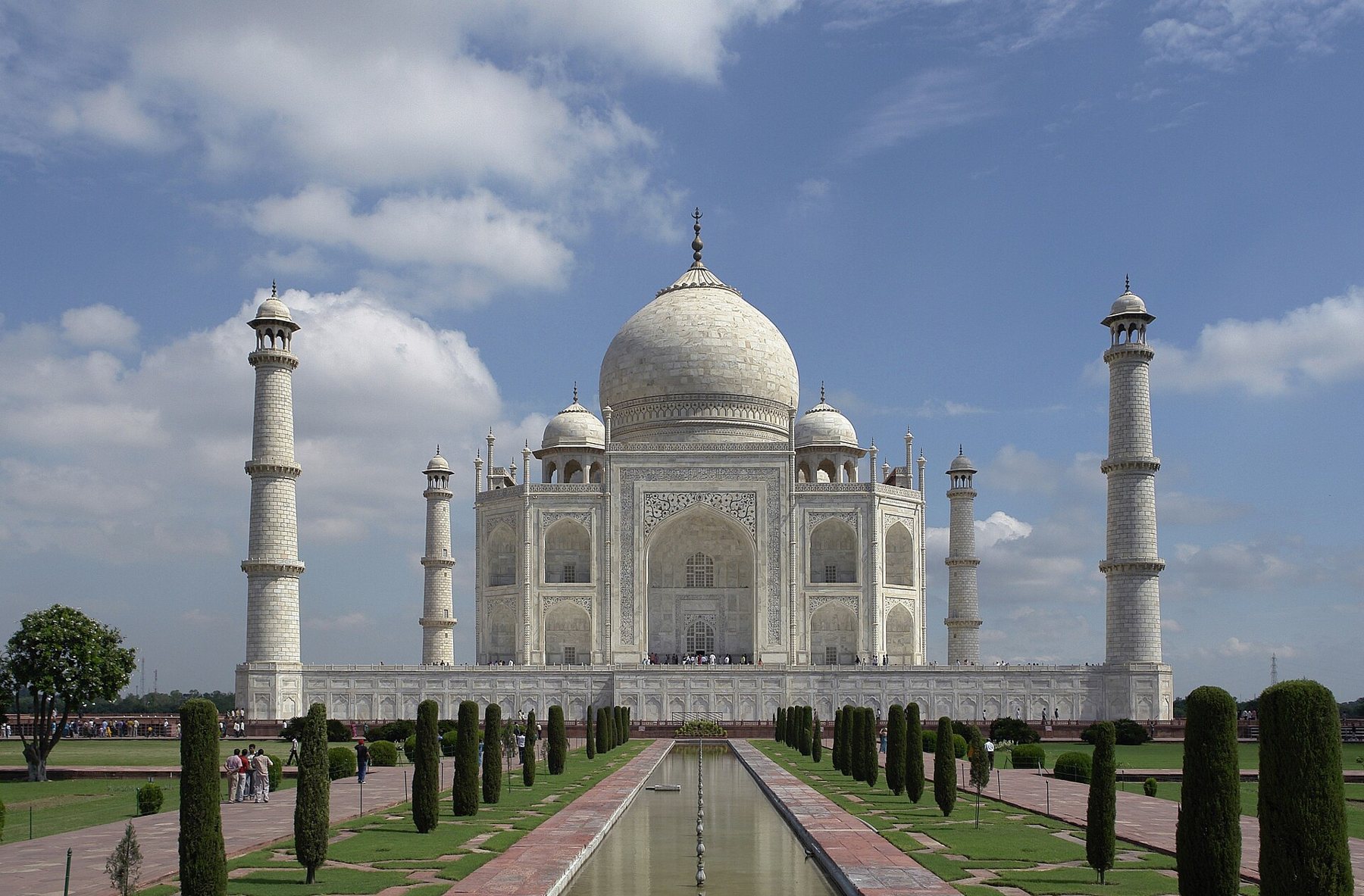
The Taj Mahal is a white building that is rarely white in photographs. At first light it takes on a cool grey, then a pale pink, and by mid-morning it can look flat and chalky under a hazy sky. The art of photographing it is mostly the art of arriving early, knowing where the sun will rise, and accepting that Agra's air decides more than your camera does.
The tomb stands on the south bank of the Yamuna and faces south, towards the great red gateway you walk through. That simple fact sets every frame. When you stand in the gardens looking north at the dome, the sun rises on your right, from the east, and sets on your left. Morning light rakes across the east side of the marble; late light warms the west side. The north face, which looks over the river, is the one you see from the far bank.
Marble that keeps changing colour
Because the building is so pale, it picks up whatever colour is in the sky. A clear dawn gives soft pink and peach tones for a short window. A thin layer of cloud can turn the dome silver and makes the inlay easier to read. Harsh midday sun, by contrast, burns out the detail and leaves the dome almost featureless against a white sky.
For a phone or small camera, this means two things. Expose for the marble, not the garden: tap on the dome and let the trees go dark if they must. And shoot more than you think you need in the first half hour, because the colour moves fast and a frame that looked dull at the time often turns out to be the subtle one.
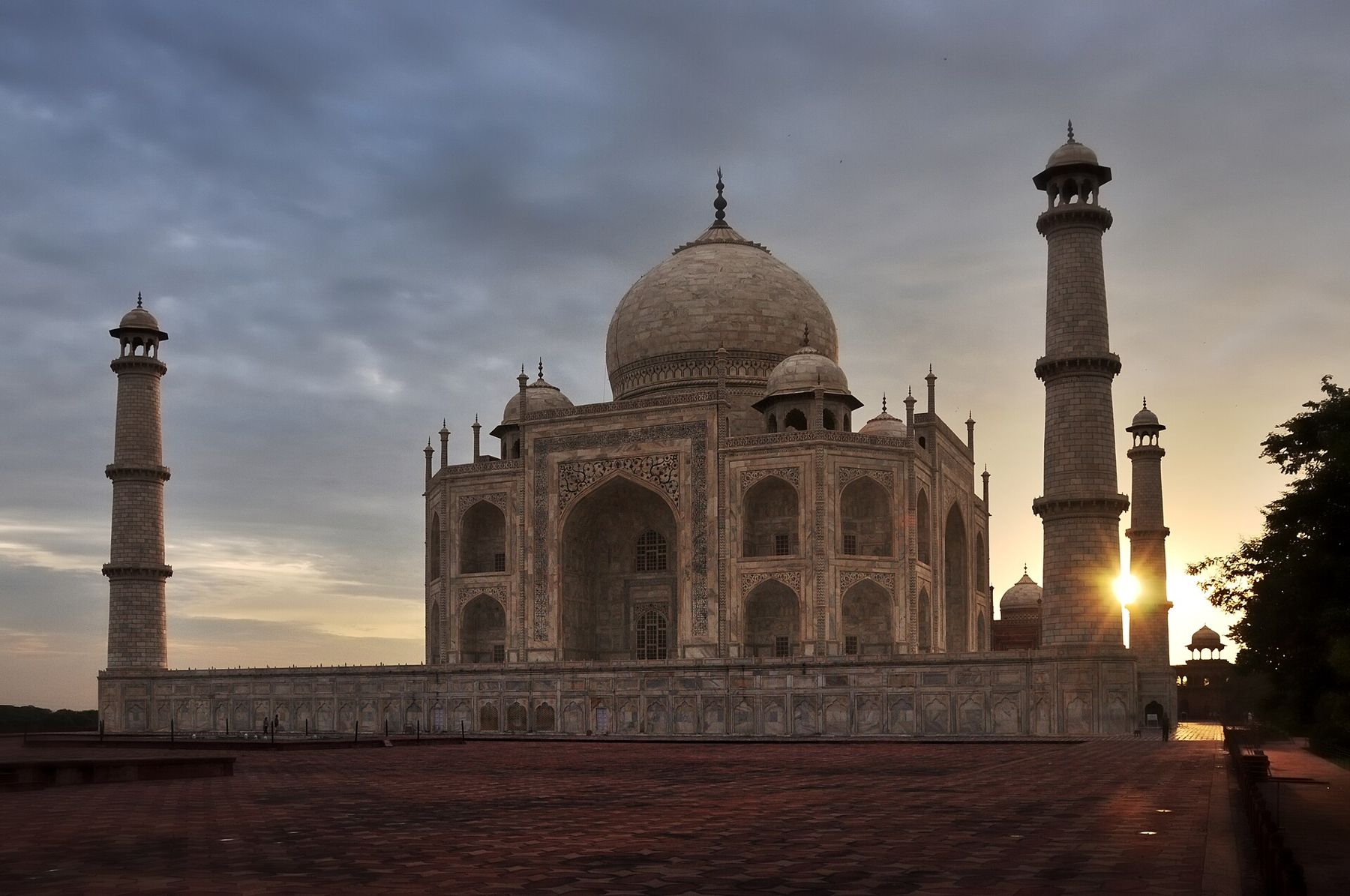
First light from the gate and the long pool
The classic view is the one through the main gateway: the long water channel running north between rows of cypress, with the tomb at the end. Everyone who enters stops here, so the first minutes after the gates open are the only time it is calm. Walk through the gateway briskly and decide your frame before you arrive.
The centre line is the obvious spot, and it is where a dense row of people forms within minutes. Step a few paces to one side of the channel instead. An off-centre position lets you put the reflection along one edge of the frame, use a line of cypress as a lead-in, and keep the people on the central platform out of sight behind the trees. If the water is still, crouch low and close to the edge so the reflection fills more of the frame.
Further in, the raised marble bench halfway along the channel is the famous seat for portraits, and the queue for it is long. For photographs of the building, it is rarely worth the wait. The side walkways along the gardens give longer, quieter views, and the mosque and its twin guest hall on either flank make strong red frames for the white dome.
Walk through the gateway briskly and decide your frame before you arrive.
On the platform itself, look for detail rather than the whole building. The inlaid flowers, the carved panels at the base and the calligraphy around the arches are all best in low, side-on morning light. Shoes are covered or removed on the platform; follow what the staff ask.
The far bank of the Yamuna
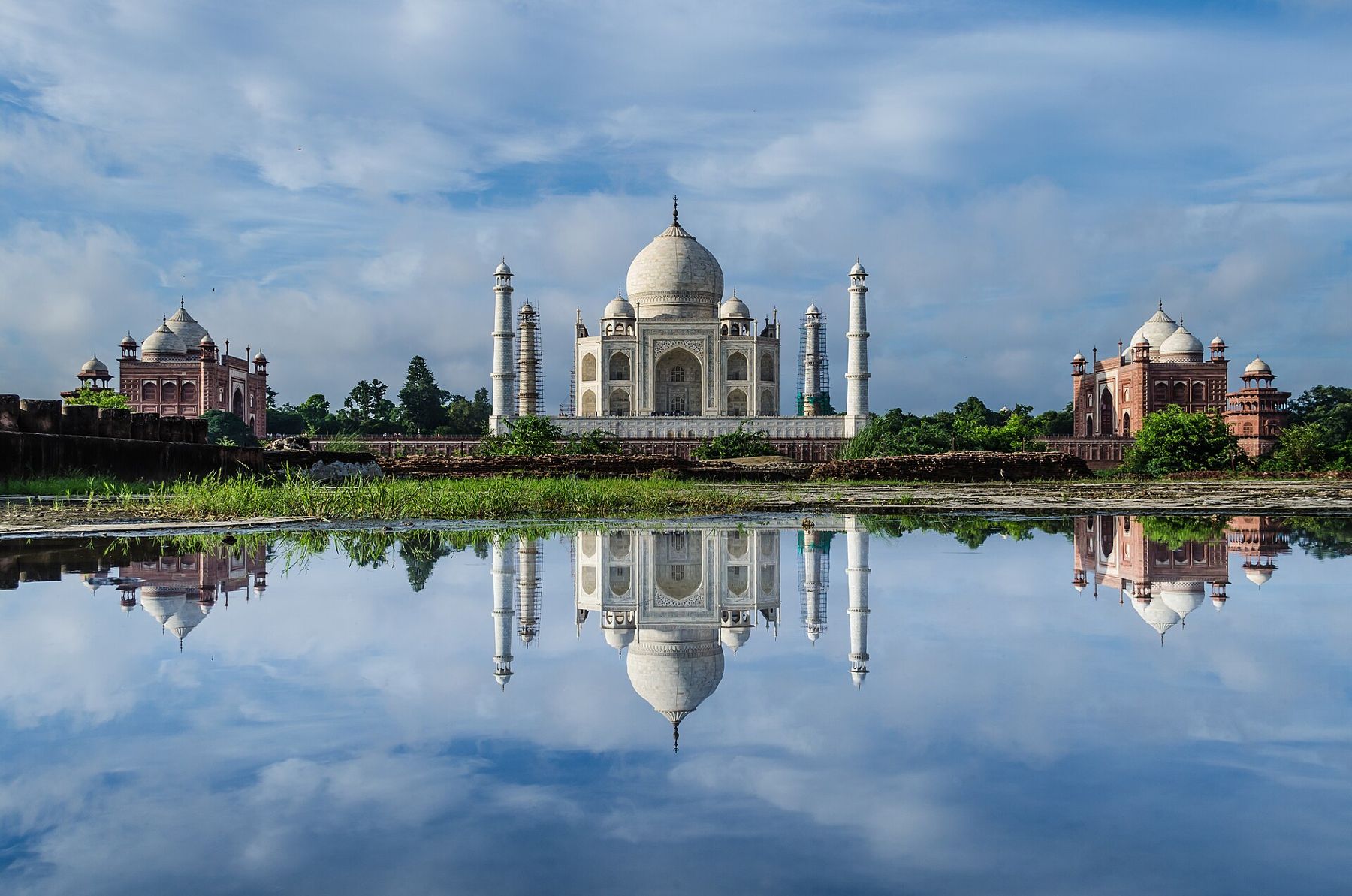
Across the river, almost directly north of the tomb, lies Mehtab Bagh, a walled garden laid out on the same axis. From here you see the back of the Taj Mahal, with the river in front and no crowds at all. It is the place for late afternoon and sunset, when the sun drops to your right and lights the west side of the dome while the sky behind turns warm.
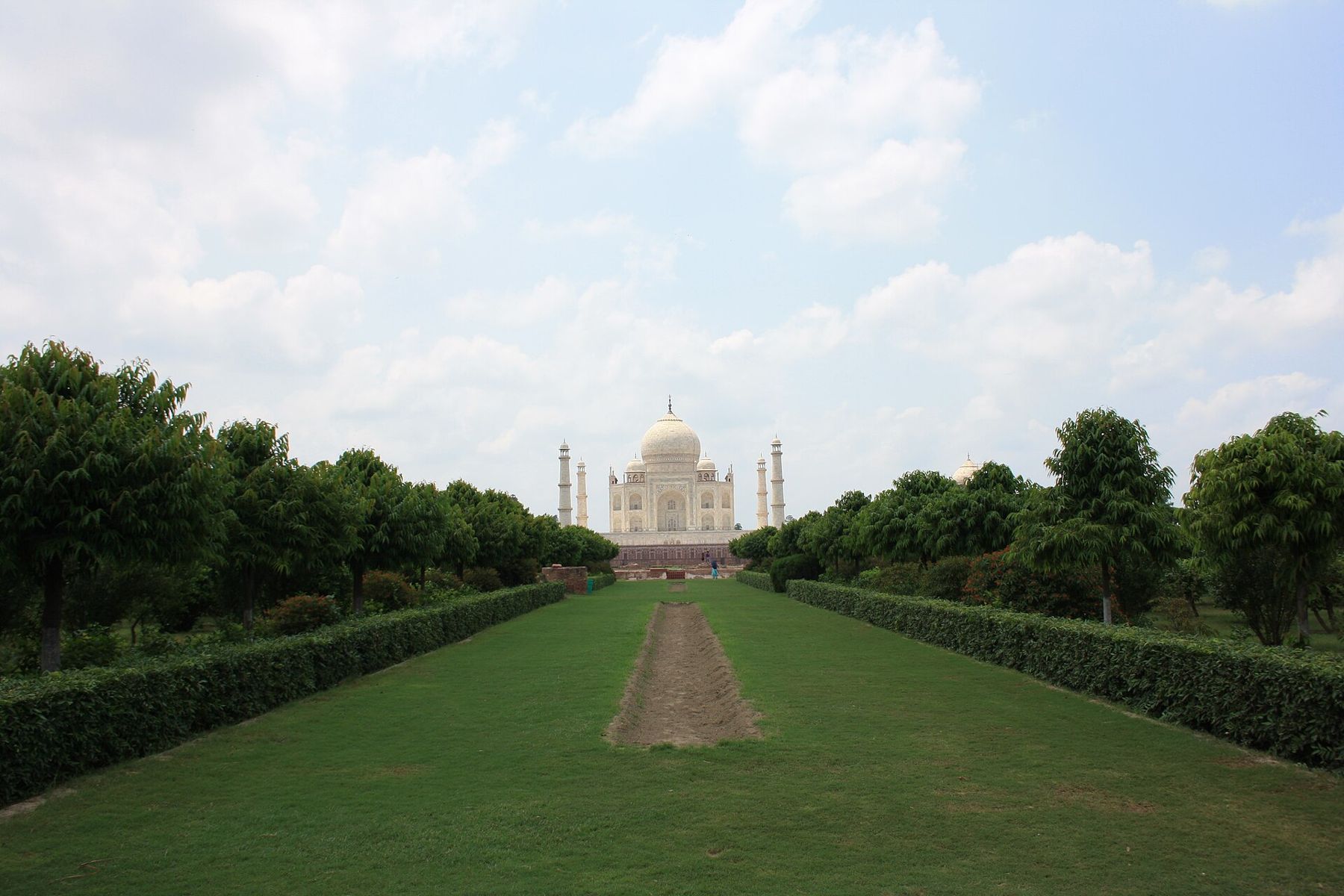
The garden is quieter and simpler than the main complex. Its long lawns and hedges point straight at the tomb, which makes an easy symmetrical frame with a normal lens. For something tighter, a short telephoto pulls the dome and minarets closer and compresses the river bank.
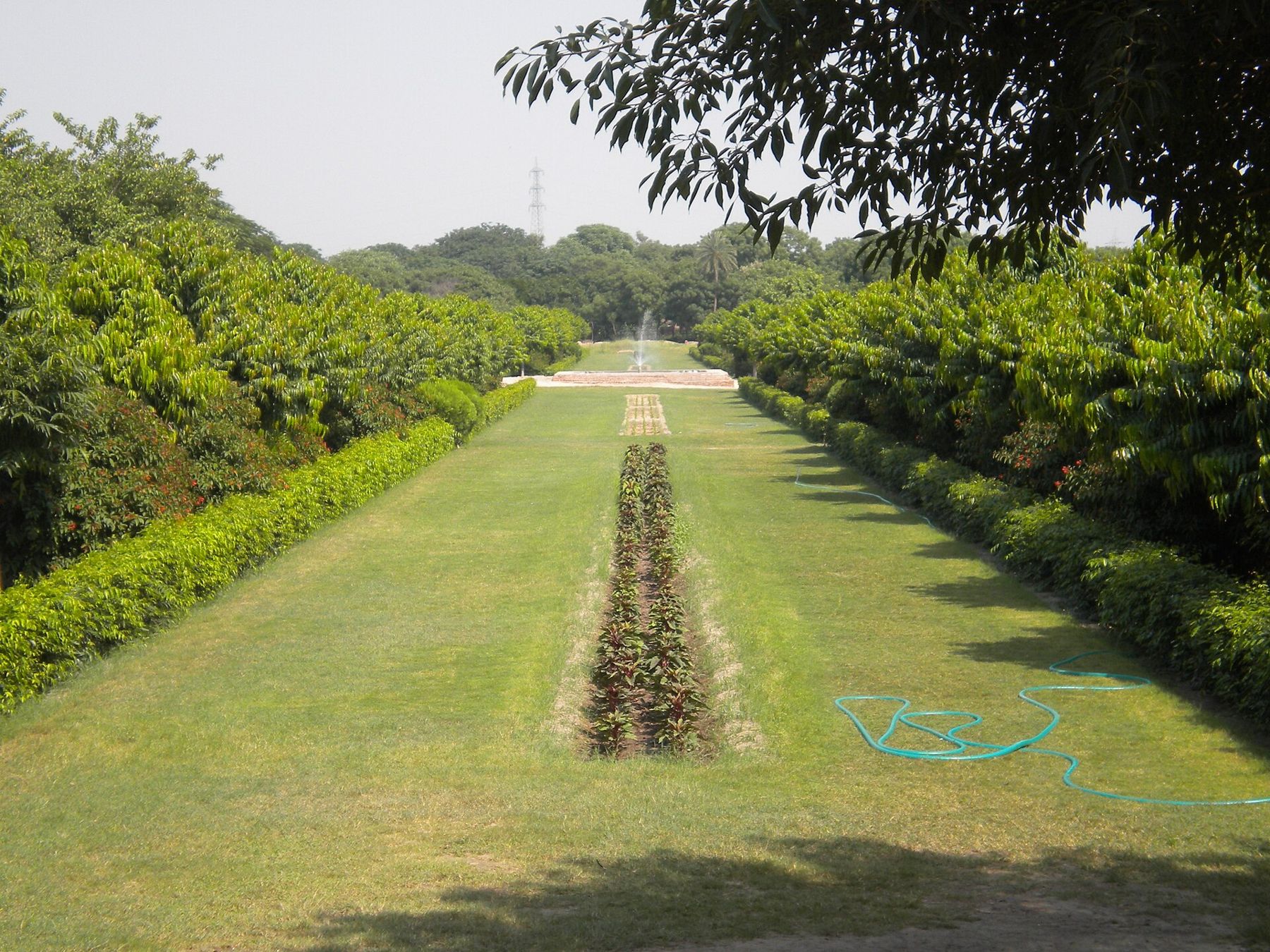

Between the garden and the riverbank, low ground often holds water after rain. Puddles and pools here give mirror reflections of the whole complex, including the red sandstone mosque and guest hall on either side. Stay on paths and on safe ground, and do not walk down to the water's edge where it is fenced off. Mehtab Bagh is a separate site with its own entry and its own hours; check before you go.
Haze, monsoon and the clear weeks
Agra sits on the plains, and the air is rarely crystal clear. From roughly late November into January, winter mornings can bring thick fog and smoke haze that hides the tomb completely from across the river and softens it even from the gate. Some of those mornings clear by mid-morning; some never do. If you only have one day, give yourself a second try if you can.
October, February and March tend to offer the best balance: cooler air, cleaner skies after the rains, and sunrise at a civilised hour. April to June is very hot, and the heat shimmer and dust flatten everything by mid-morning. The monsoon, roughly July to September, brings dramatic clouds and fresh green gardens, with the chance of standing water for reflections, but also heavy showers and humid haze. For grey skies, there is advice on working with soft light on overcast days that applies well here.
Blue hour is limited by opening times, since the main gardens are not open long before sunrise or long after sunset. From the far bank, though, you can stay until the sky deepens. A building this pale holds detail well against a dark blue sky; see the notes on why blue-hour shots look grey if your evening frames come out flat.
Rules that shape the frame
The monument is cared for by the Archaeological Survey of India, and its rules are strict and enforced at security. The main complex closes to general visitors on Fridays, when the mosque is used for prayer. Tripods are not allowed inside, and neither are drones; there is also a list of items you cannot carry, which can include food, large bags and some electronics. The list changes, so read the current rules before you go and expect a thorough bag check.
Tickets, entry gates and timings are revised from time to time, and there are sometimes special night viewings on nights around the full moon. Check the official information close to your visit rather than relying on what someone remembers from last year. A small bag speeds you through security, which matters when sunrise is the whole point.
Without a tripod, steady yourself against a wall or railing on the far bank, raise the sensitivity slightly, and take bursts in low light. The general tripod rules at famous sights apply here in their strictest form. Be respectful at the mosque and around anyone praying, and keep your camera down in the tomb chamber, where photography is not permitted.
If you get one clear, calm morning, spend it at the long pool and on the platform. Save the far bank for the end of a hazy day, when the sun is low and the crowds are all on the other side of the river.