Frames from Asia · Siem Reap
Angkor Wat and the second pond
The temple faces west, so it gives you two shows a day: towers in silhouette at dawn and warm stone in the afternoon. Here is where to stand for both.
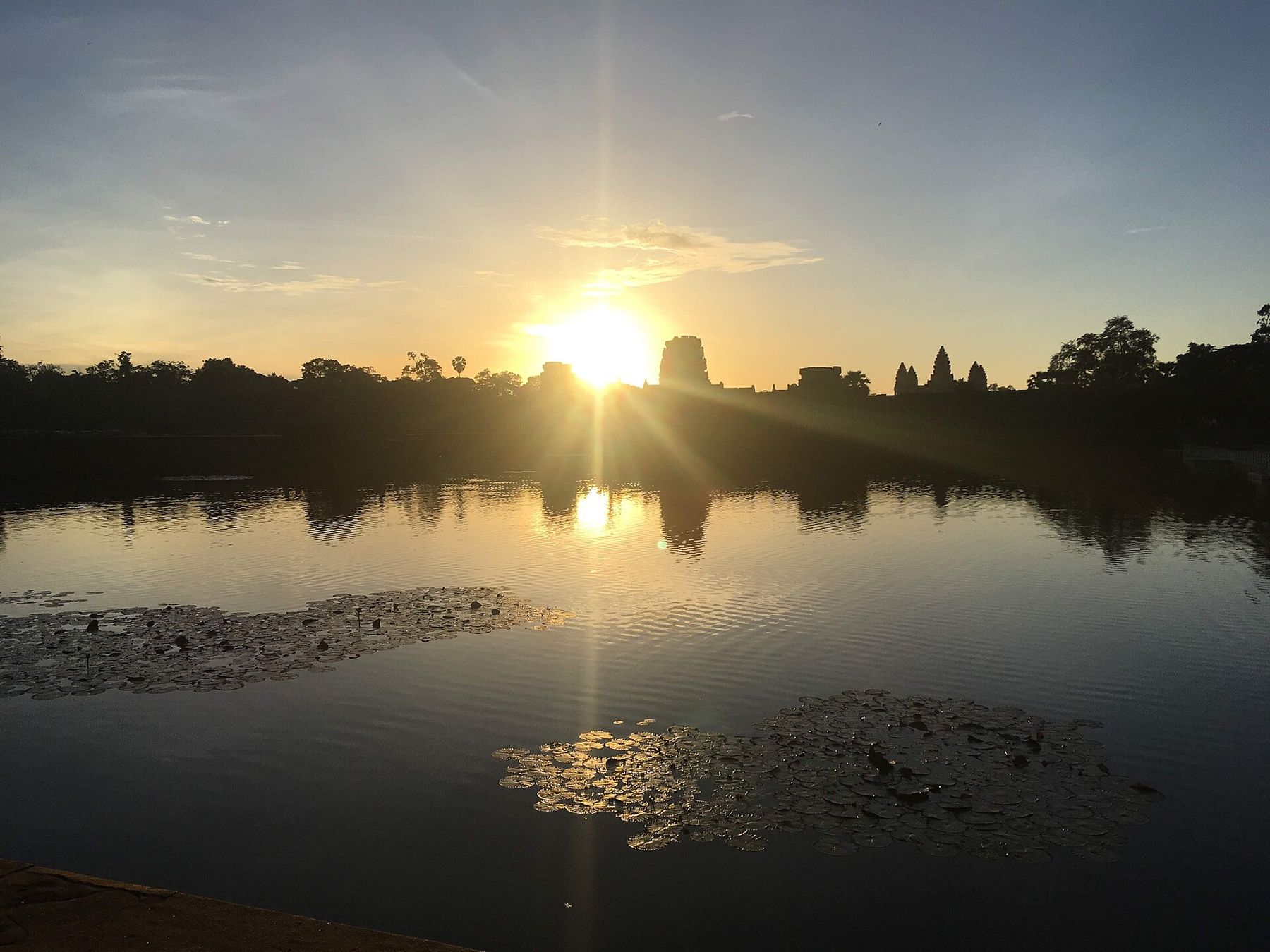
Most great temples face east, towards the sunrise. Angkor Wat faces west. For photographers this is the most useful fact about the place, because it splits the day in two. At dawn you stand at the front of the temple and look east, straight into the sunrise, so the five towers become a dark cut-out against a coloured sky. In the afternoon the sun swings round behind you and lights the whole western front, carvings and all.
Between those two moments the stone goes flat and grey, the heat builds and the light comes from overhead. Plan the day around the two ends and spend the middle inside the galleries, in the shade, or somewhere else entirely.
Five towers against the dawn
The sunrise crowd walks in across the long causeway over the moat in the dark and spreads along the edge of the pond to the left of the path, the north pond. It is the famous spot for a reason: from its far side, the full row of towers lines up and doubles in the still water. Arrive well before first light if you want the front row, and bring a small torch for the uneven ground.
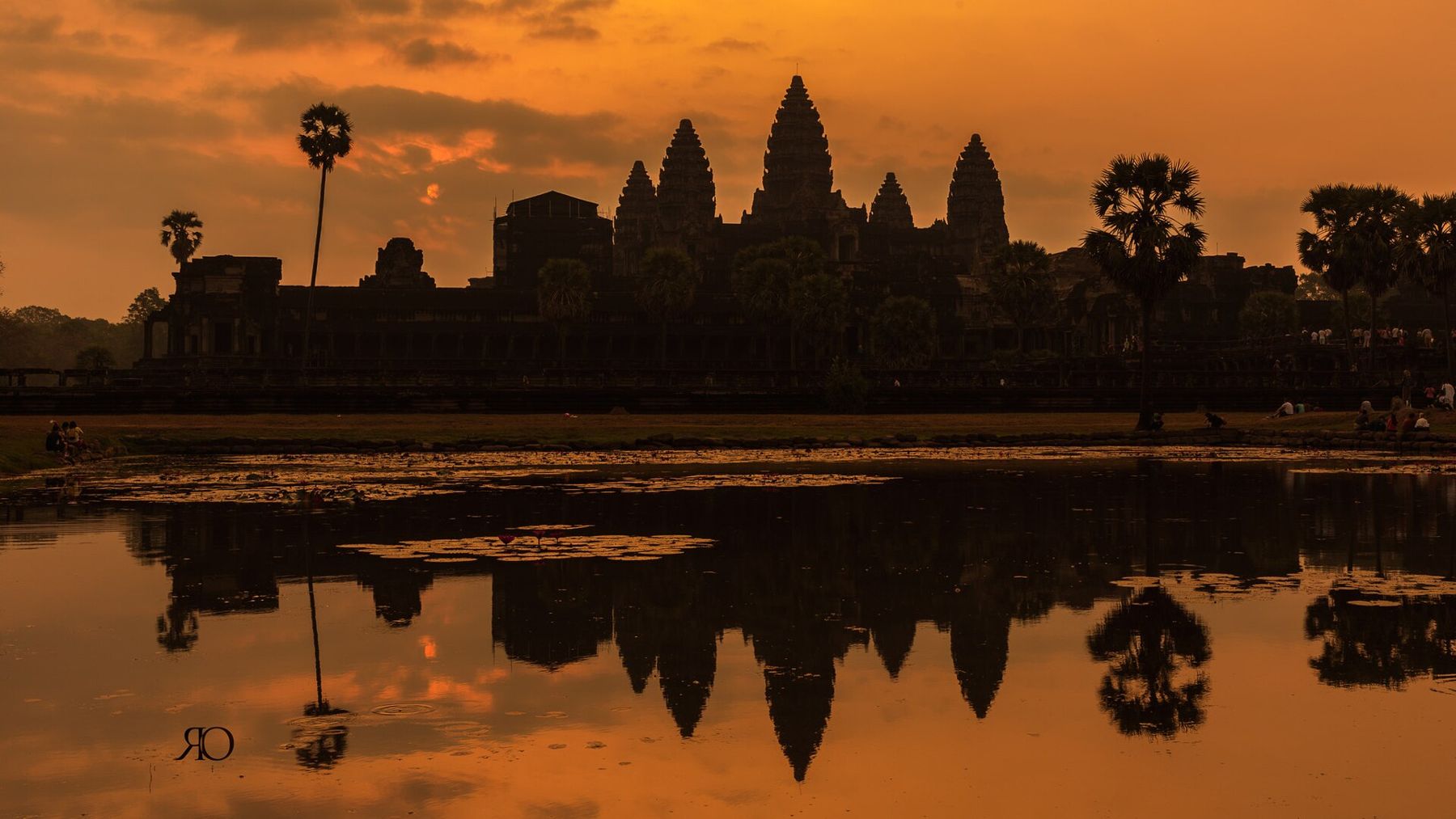
The sky usually colours fifteen to thirty minutes before the sun itself appears. That is often the best frame of the morning, because once the sun clears the towers it blows out the sky and leaves the temple a black shape with a hot spot. Expose for the bright sky and let the stone go dark; a silhouette is the point here. Around the March and September equinoxes the sun comes up close behind the central tower, which draws the biggest crowds of the year; at other times it rises further to one side.
Lilies and lotus leaves in the pond can make good foreground, but they also break up the reflection. Move along the bank until you find a clean patch of water in front of the towers, and get low so the reflection is as large as possible.
The second pond and quieter angles
There is a matching pond on the right of the causeway, the south pond. It gets a fraction of the people and offers almost the same view, slightly turned. In some months it holds less water, or more plants, so take a look on your first walk in before you commit to it on a sunrise morning.
You can also stand further back on the causeway or near the western entrance gate and use the long approach as your lead-in line. With a short telephoto, the towers stack up and the sky looks bigger behind them. Turning around matters too: as the sun climbs, the light behind you falls across the moat and the outer walls, and the crowd itself becomes a scene of torches, phones and silhouettes, if you prefer people in the frame.
The general approach in beating crowds without a dawn alarm also works here: many sunrise visitors leave for breakfast soon after the sun is up. That leaves the inner galleries and courtyards unusually quiet for an hour or so.
West-facing afternoons
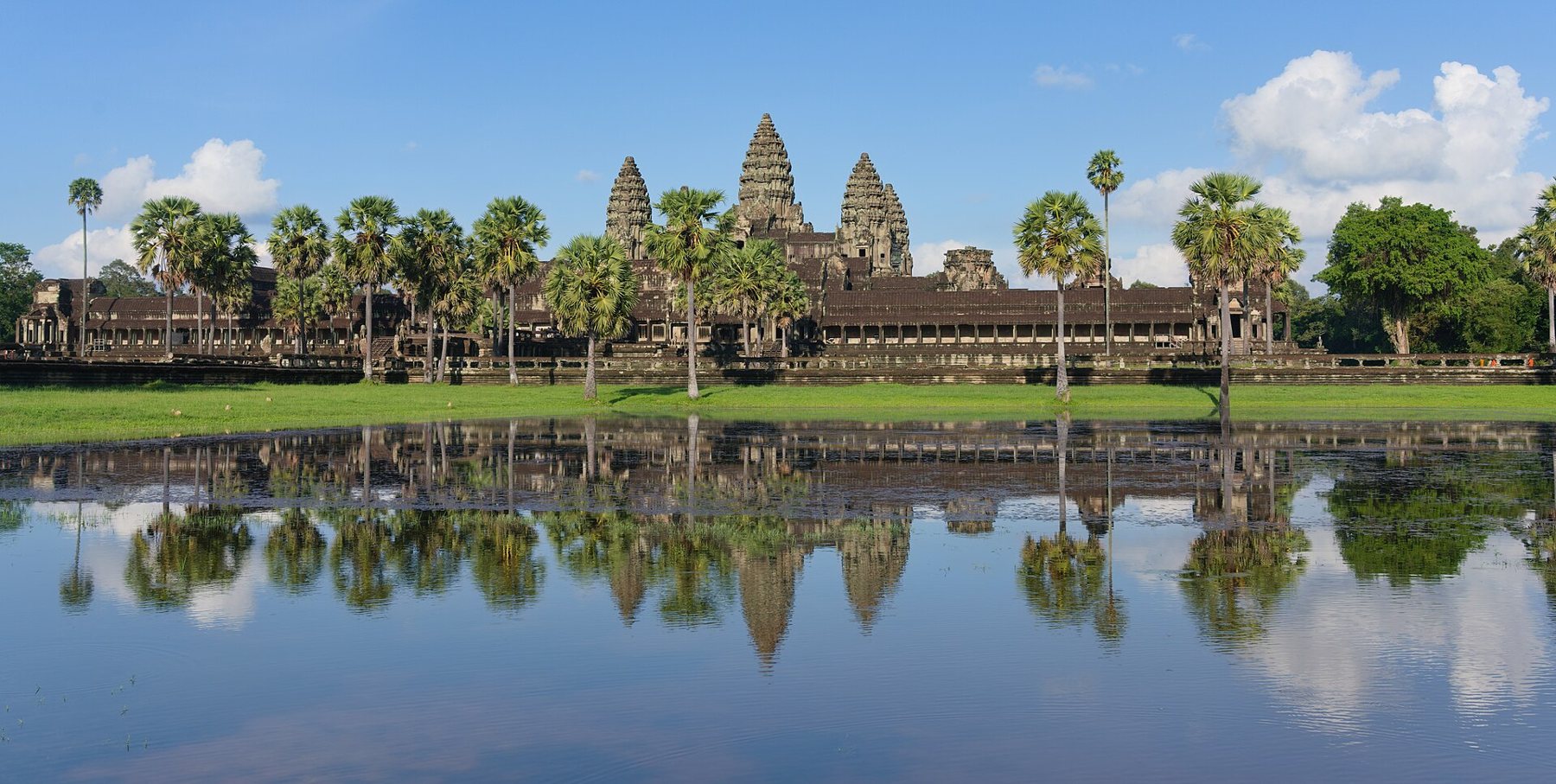
From mid-afternoon onwards the sun drops behind the causeway and lights the western front of the temple head-on. The sandstone warms to honey and orange, the palms throw long shadows across the grass, and the carvings in the outer galleries are lit at a low angle that shows every relief. The same ponds work again, now with the temple lit rather than silhouetted.
Plan the day around the two ends and spend the middle inside the galleries, in the shade, or somewhere else entirely.
This is also the better time for the long bas-relief galleries on the west side, because the light reaches further under the roof. Inside the galleries, though, contrast is strong; let the bright columns go white or expose for the carvings and accept dark pillars.
Closing time limits a true sunset inside the grounds, and the sun sets behind you anyway. If you want the sky to be part of it, use the late light on the temple front and then watch the colour build over the moat on your way out.
Inside the galleries
The central sanctuary is a working religious place as well as a monument. Statues of the Buddha in the galleries are still dressed in cloth and offerings are left in front of them. Photograph them quietly, from a respectful distance, and never pose with them or step onto a plinth. Ask before photographing monks or anyone praying.
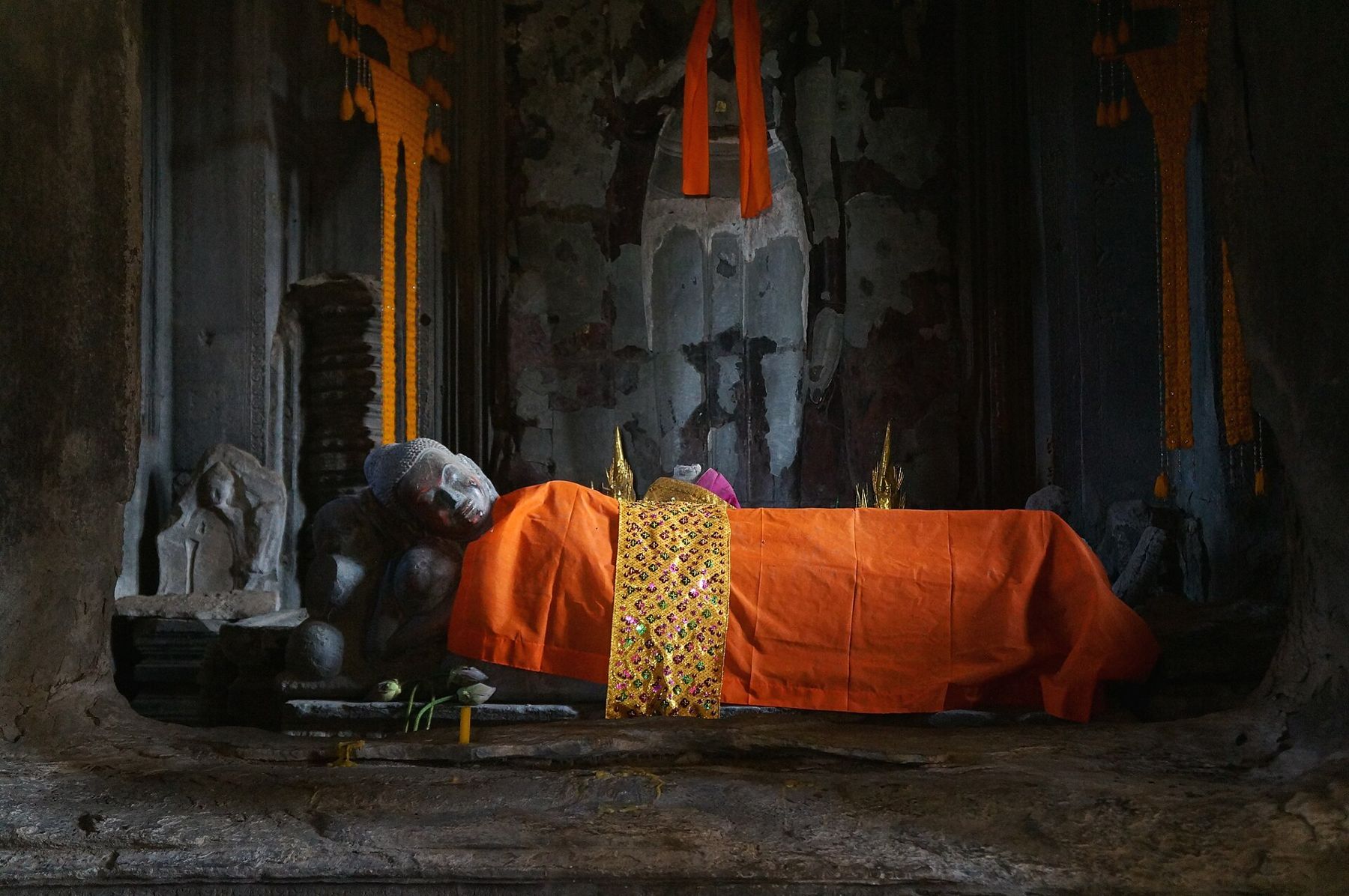
The light in these rooms is low and comes from the doorways, which can be beautiful if you work with it: a shaft from a window falling on stone, a carved figure half in shadow. Raise your sensitivity rather than reaching for a flash, which flattens the stone and disturbs people around you.
The upper level of the central tower is reached by steep stairs and has its own rules. Visitors are usually asked to cover shoulders and knees, there can be limits on numbers and age, and it closes on some religious holidays. Check the current rules on the day.
Seasons, water and the pass
Water in the ponds decides how good the reflection is. Late in the rainy season and in the first cool months, roughly September to January, they are usually full. By the hot months, from about March to May, the level can drop sharply, plants take over and the reflection can disappear. The cool, dry months from November to February also bring the clearest dawns and the biggest crowds.
The rainy season, roughly May to October, has its own rewards: fresh green grass, dramatic clouds and the occasional brilliant clear morning after a night of rain, but also downpours and grey skies. On those days the advice on shooting on overcast days is useful, especially for detail inside the galleries.
Entry to the temples of Angkor needs a pass bought from the official ticket office, valid for one or several days and checked at the temples. Prices, validity and the rules on what time sunrise entry begins change, so check before you go. Drones are not allowed without official permission, and you should assume you do not have it. Tripods are generally used at the ponds at dawn, but staff may ask you to move or pack them away inside and in crowded spots, so follow what you are told. The general tripod rules still hold: never block a narrow passage or a stairway.
Carry water, a hat and a light layer to cover up. Stay on the marked paths and do not climb on carvings or fallen stones, however good the angle looks.