Frames from Europe · Venice
The Rialto, last hour of sun
The Grand Canal bends at the Rialto, and in the last hour of sun the bridge, the palaces and the water all turn gold. Here is which bank to stand on and when to stay.
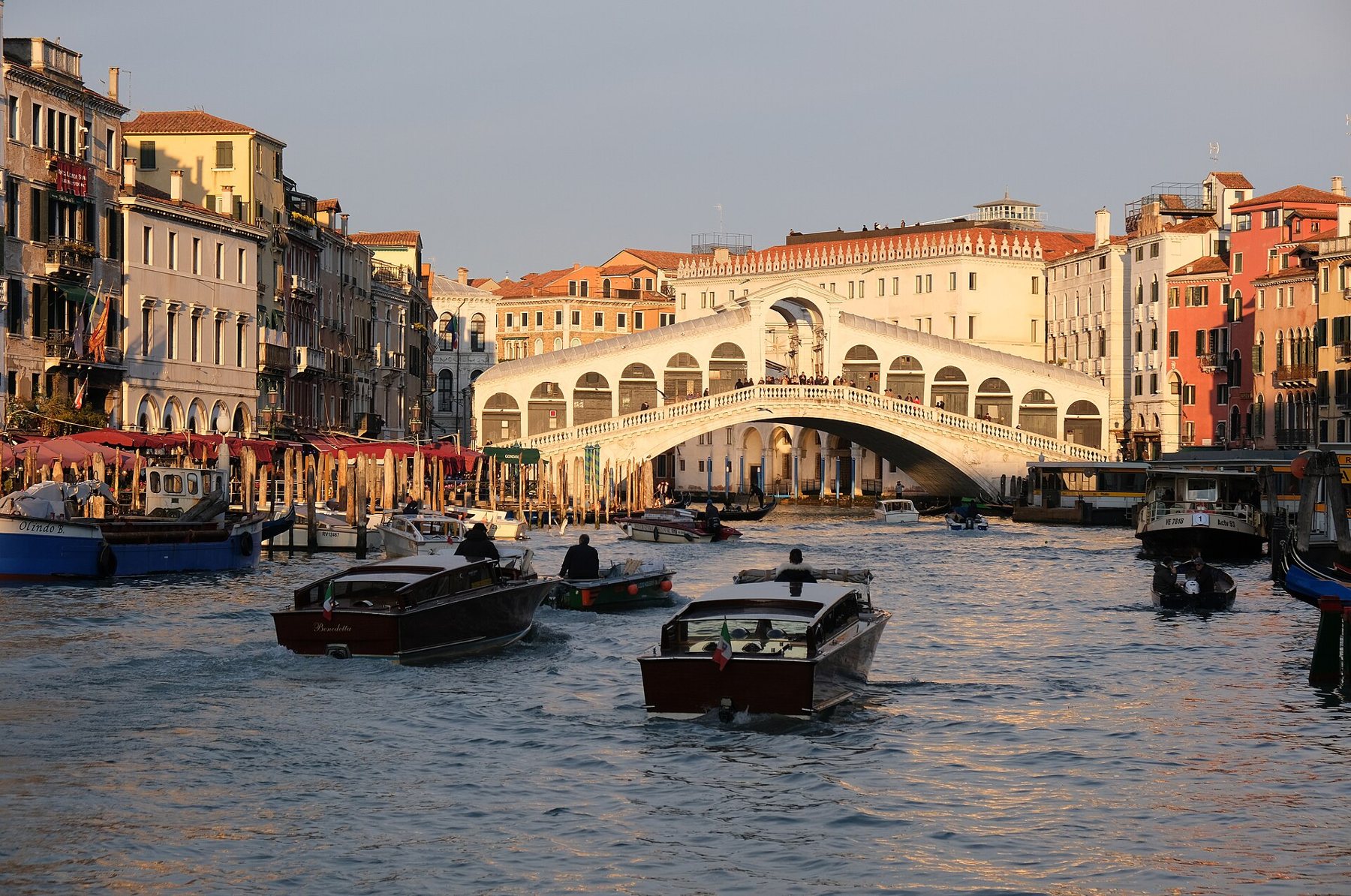
The Rialto is the oldest of the bridges across the Grand Canal and the one everyone wants to stand on. It is a single broad stone arch carrying two rows of small shops, with a covered portico at the top and steps rising on either side. From the water it looks heavy and graceful at once, and in the last hour of sun the white stone glows.
The canal makes a broad bend here. Coming down from the railway station it runs roughly south-east, passes the market and the bridge, then swings off towards the south-west. That bend is why the Rialto works so well in the evening: from the bridge you look down a long stretch of water towards the setting sun, and from the banks below you see the arch side-lit against the sky.
Two banks, two kinds of light
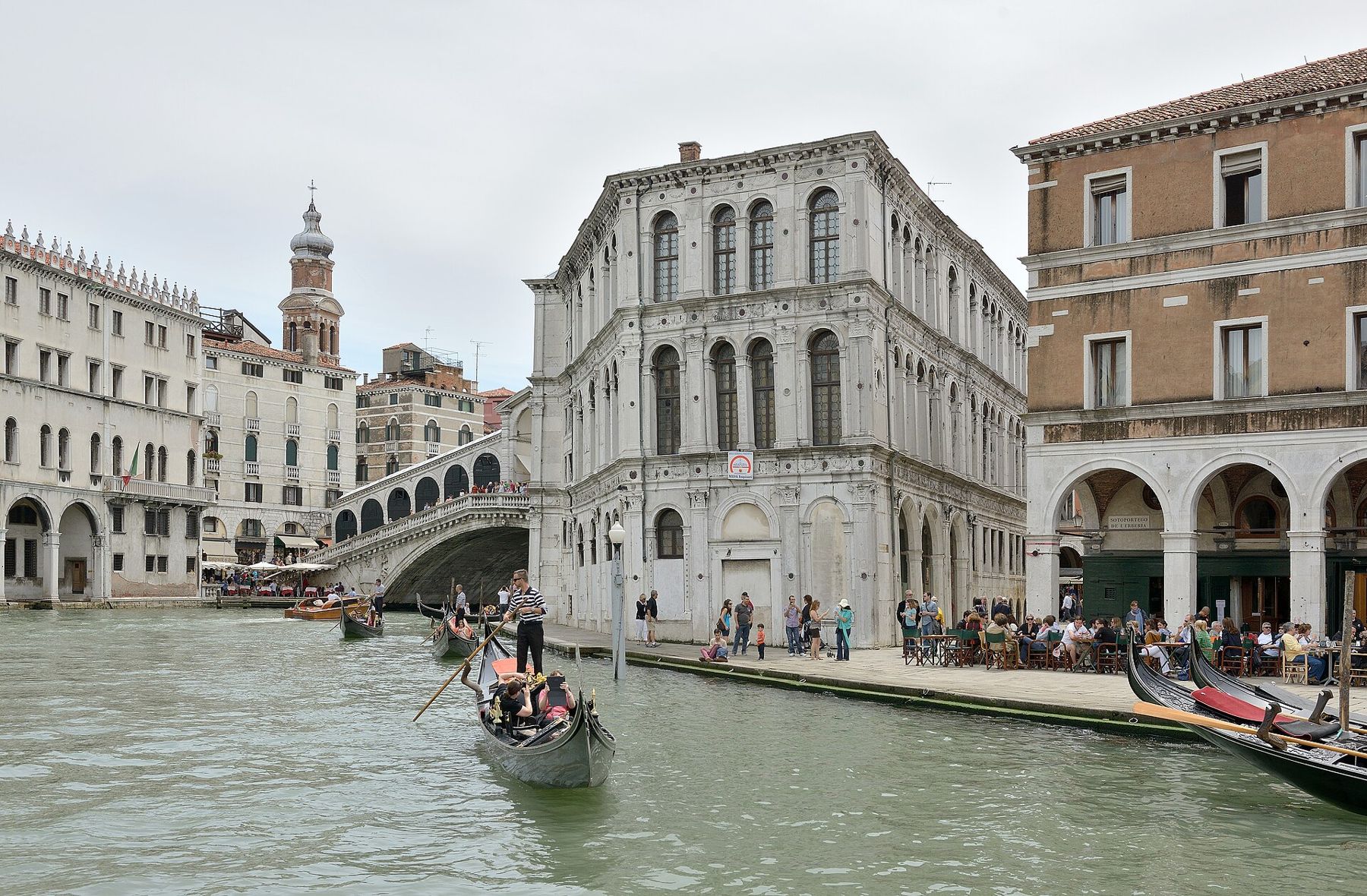
The riva is the stone quay along the water. Just downstream of the bridge, on the San Polo side, the Riva del Vin runs along the canal with an open view of the arch. On the opposite bank, the San Marco side, the Riva del Ferro does the same from the other direction. Both are lined with restaurant tables, so you will be working around chairs and umbrellas, but both offer clear views where the quay meets the water.
In the late afternoon the sun comes from the south-west and west, low over the rooftops. From the Riva del Vin it falls across the downstream face of the bridge and lights up the palaces on the far bank, which turn cream, pink and ochre. This is the classic warm frame, and it is at its best in the last hour before sunset, when the light is low enough to glow but still reaches the water.
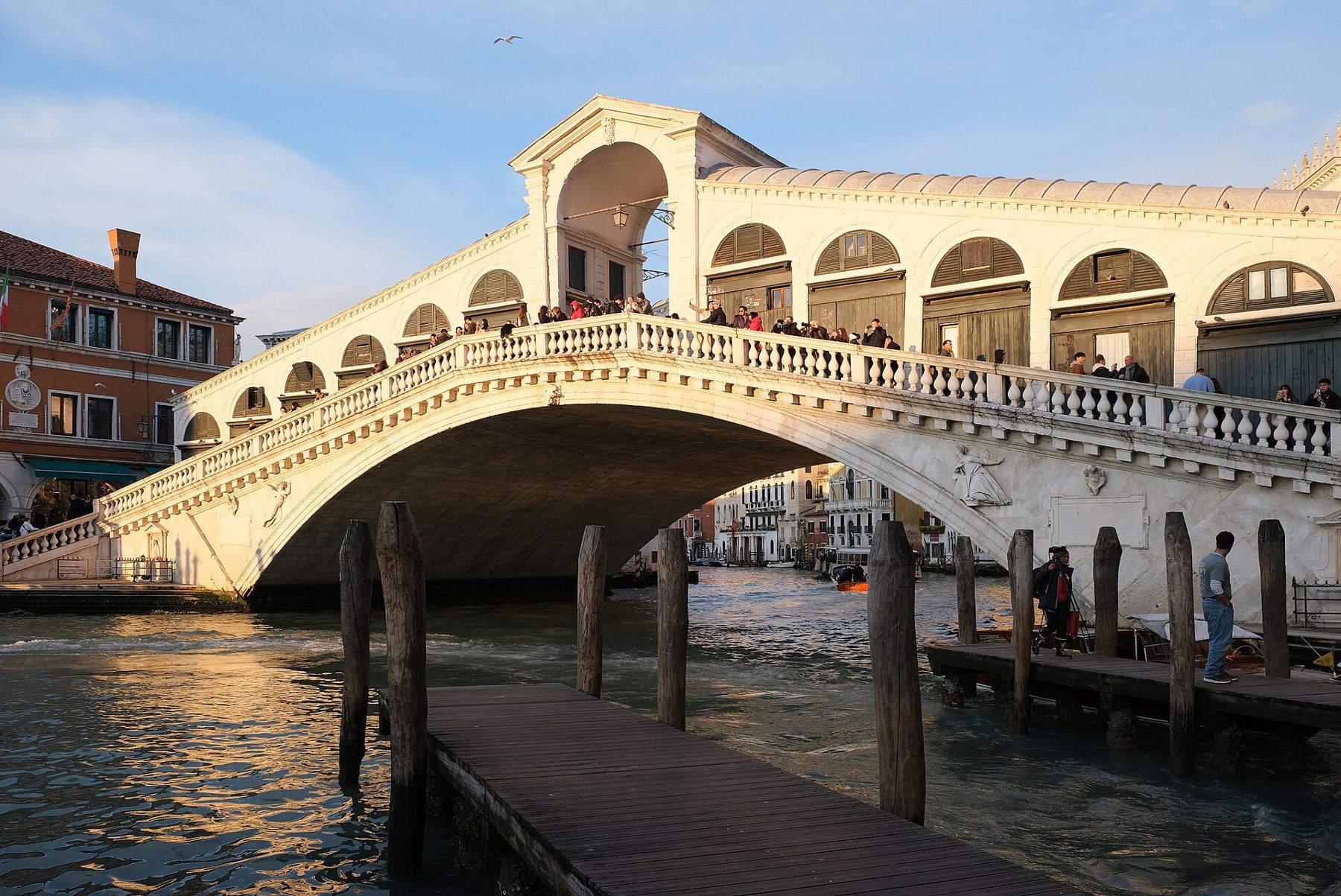
The Riva del Ferro, by contrast, is better in the morning, when the sun from the east lights the San Polo bank and the market buildings. At sunset it puts the bridge between you and the brightest part of the sky, which suits silhouettes and reflections more than detail.
Look for foreground. The striped mooring poles, the wooden landing stages and the gondolas tied up along the quay all give depth. A short telephoto from a little further back compresses the bridge, the boats and the palaces into one dense frame, which suits this crowded corner of the city.
On top of the bridge
From the top of the Rialto you look down the Grand Canal towards the bend, with palaces lining both sides and traffic weaving below. At sunset the sky over the canal colours and the water picks it up. This is the most popular viewpoint in the city at that hour, and the balustrades fill shoulder to shoulder. Arrive early, claim a spot at the outer railing, and be prepared to share it.
Arrive early, claim a spot at the outer railing, and be prepared to share it.
Wide frames work from here, but so do long ones: a single gondola crossing a band of golden water, a vaporetto pulling away from the stop, the lit windows of one palace. Keep shooting as the sun goes, because the colour often peaks after it has dropped below the rooftops.
Gondolas, vaporetti and the water itself
The Grand Canal is a working street. Water buses, taxis, delivery barges and gondolas all pass under the arch, and their wakes break up any reflection within seconds. Rather than waiting for still water that will not come, use the movement: a slightly slower shutter turns the wakes into soft lines, and a fast one freezes a gondolier mid-stroke.
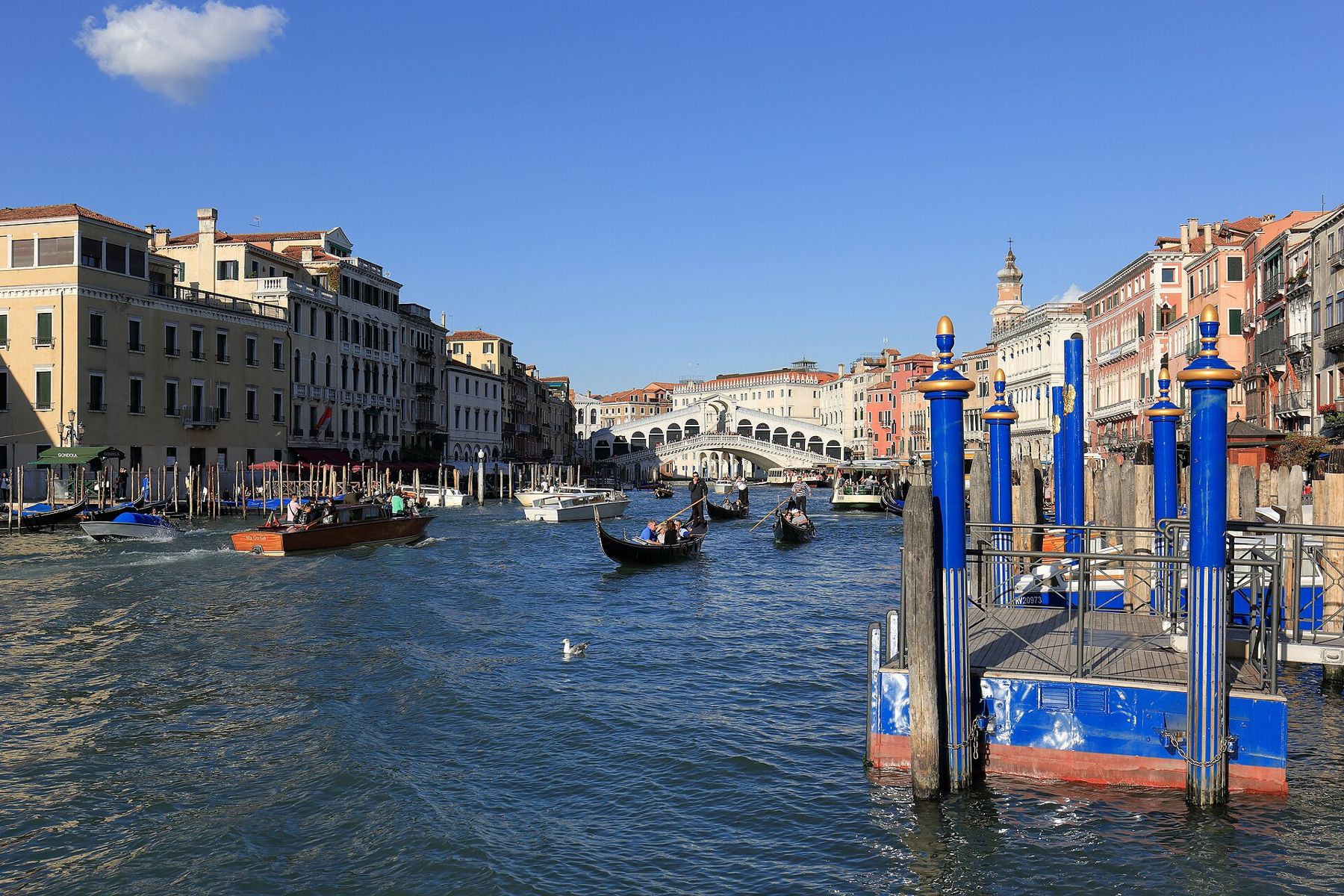
Vaporetto line 1 runs the full length of the Grand Canal at a slow pace and stops at the Rialto. Riding it in the late afternoon, standing at the open part of the boat where space allows, is one of the easiest ways to photograph the bridge from the water. The approach from the south, coming up the canal towards the arch, gives the best angle. Timetables and ticket types change, so check the current information before you ride.
Gondoliers and their passengers are part of every frame here. Photographing them in the scene is normal; long close-ups of individuals are not, so ask if you want a portrait.
Blue hour on the Grand Canal
When the sun has gone, stay. Within half an hour of sunset the sky turns a deep blue, the bridge's lamps come on, and the restaurant lights along both banks reflect in the water. The contrast between the warm lamps and the cool sky is the reason to wait, and it lasts only a short while. If your evening frames come out muddy or grey, the advice on why blue-hour shots look grey covers exposure in plain terms.
Overcast days are not lost here. Soft light suits the narrow lanes around the market, the colour of the gondolas and close details of stone and water. The notes on working with overcast light apply to most of the city.
Crowds, seasons and rules
Venice is busiest from late spring to early autumn and at holiday weekends and carnival. The Rialto is crowded for most of the day in any season. The calm times are early morning, before the shops open and the day visitors arrive, and late evening, when the bridge empties and the quays fall quiet. For more on this, see beating crowds without getting up at four.
Late autumn and winter bring low sun all day, which is lovely on the canal, along with fog and occasional high water that floods the lower quays. February to April often gives clear, cool evenings without the summer crush.
Rules for visiting the city change. There may be an access fee for day visitors on certain dates, and local rules on behaviour in public spaces are enforced, covering things such as sitting or eating in certain areas and swimming in the canals. Keep the passages clear, and move on when you are asked. Tripods on the bridge itself or on narrow quays will block people, so keep them for quieter corners, or brace against a railing instead. Drones over the historic centre are heavily restricted; assume you cannot fly one. Check the current city rules before you go.
Stay in one place for the last hour of sun and through blue hour. The light changes faster than you can walk between viewpoints, and the Rialto rewards patience more than footwork.